Global Site
Displaying present location in the site.
Creating Empathy in Digital Transformation through NEC’s Client Zero Strategy
Vol.19 No.1 Special Issue on NEC BluStellar: NEC BluStellar Driving the Future of Digital Transformation — A Value Creation Model Pioneered by AI, Security, Data Management, and Modernization
Since 2021, NEC has been advancing its Client Zero strategy, positioning itself as the first customer of its own solutions in order to create genuine customer value. During its internal DX journey, NEC encountered five major challenges: doubts about leadership’s commitment, conflicts of interest between departments, criticism from frontline staff regarding theoretical approaches, cultural differences with global partners, and transformation fatigue. By overcoming these barriers—and by openly sharing not only successes but also setbacks and failures—NEC has fostered deeper empathy with its customers. As a result, NEC has shifted from the traditional systems integration (SI) model to a partnership-based, co-creative approach to problem solving. This transformation forms the foundation of NEC BluStellar, announced in 2024.
1. Introduction
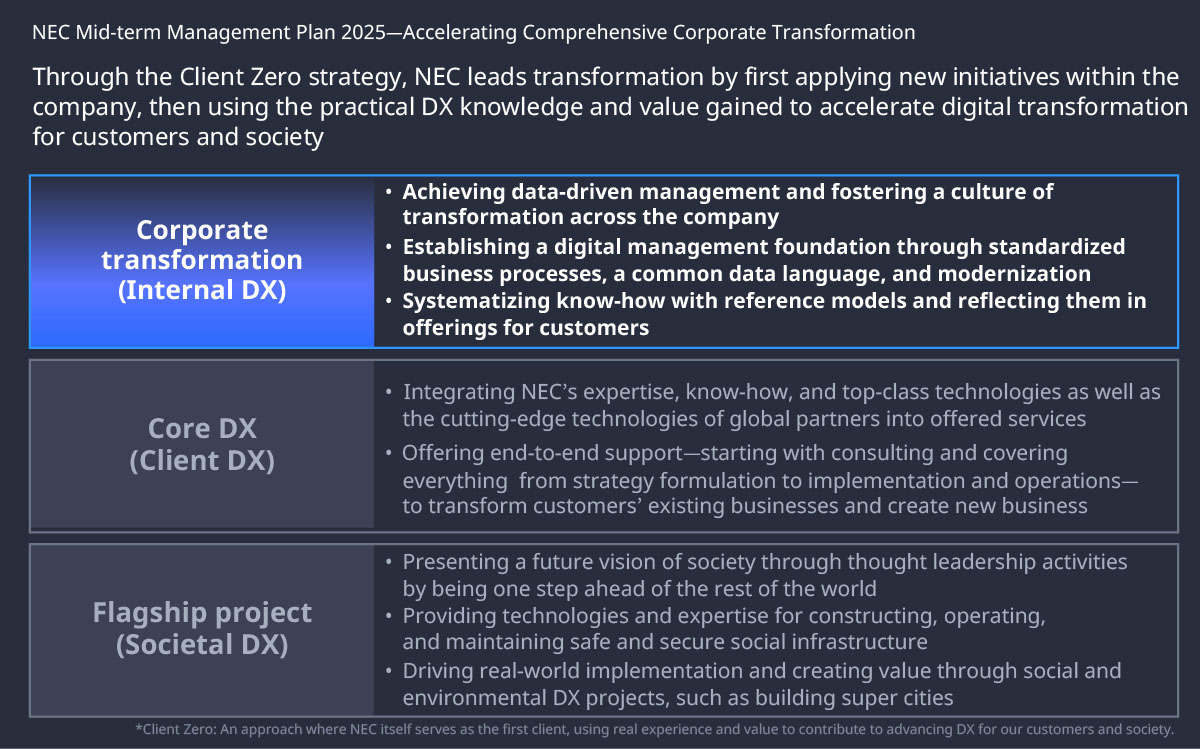
NEC is advancing its Client Zero strategy, which positions the company itself as the first customer of its own solutions. Rather than viewing internal DX as simple digitization enabled by new IT systems, NEC approaches it as a comprehensive corporate transformation (CX) implemented across the entire organization. The insights and expertise gained through these internal practices are then shared with customers and society (Fig. 1).
 Click to Enlarge
Fig. 1 Client Zero: Internal DX driving NEC’s DX advancement.
In the conventional systems integration (SI) business model, the focus has been on building and delivering systems based on customer-defined requirements. However, achieving true DX requires more than simply providing technologies and services. It requires living, practical insights—including lessons learned from what did not work—gained through real-world implementation. Through the Client Zero strategy, NEC rigorously validates cutting-edge technologies and services within its own operations, placing emphasis on identifying the challenges and solutions that only hands-on practice can reveal.
1.1 Core philosophy of the strategy
The essence of NEC’s Client Zero strategy is the philosophy that we ourselves become the very first customer—Client Zero—by implementing digital transformation (DX) using the latest technologies and services. This approach enables us to gain real-world, practical insights that we then share with customers and society.
This strategy enables NEC to create the following values:
- Accumulation of practical know-how for solving concrete problems
- Clear understanding of the real challenges and effective solutions encountered during transformation
- Establishment of a continuous improvement cycle
- Enhanced proposal capabilities grounded in firsthand experience that create empathy with customers
2. Barriers Faced in CX and Breakthroughs Achieved
2.1 First Barrier: Doubts About Leadership’s Commitment
When NEC established the Transformation Office in April 2021, the first response inside the company was a cool and skeptical one, with many employees viewing it as “just another slogan.” This reaction was rooted in their past experience: although NEC had launched various reform initiatives before, many of those efforts had ultimately slipped back into old ways of working.
Breakthrough approach: We positioned the Transformation Office as a unit reporting directly to the CEO and used a press conference to publicly demonstrate our determination to leave no room for retreat and our resolve to carry the transformation through to completion.
2.2 Second Barrier: Conflicting Interests
As we advanced company wide transformation, individual divisions strongly resisted giving up their established authority and information ownership. In particular, efforts to integrate and standardize data prompted pushback such as, “You don’t understand frontline realities,” and “This will interfere with our division specific operations.”
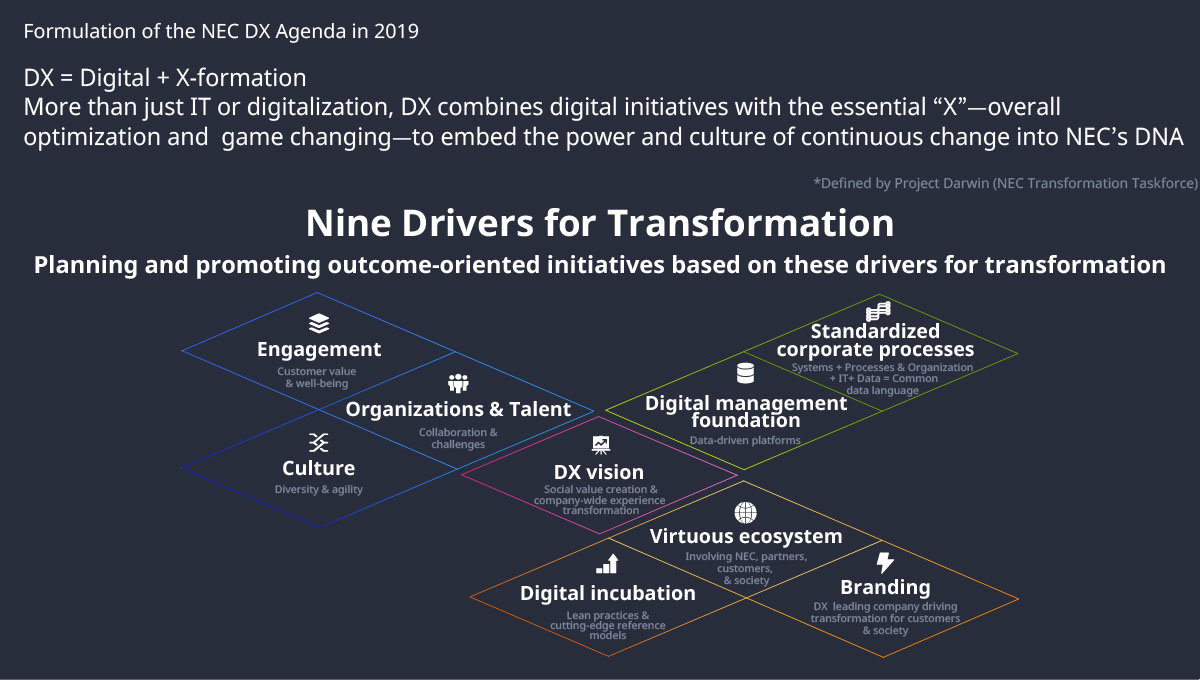
Breakthrough approach: We grounded the initiative in the NEC DX Agenda and its nine drivers of transformation, clarifying that true success requires company‑wide optimization that extends beyond local efficiencies or a standalone DX vision to include culture, ecosystem, and other organizational dimensions (Fig. 2). We also designated the 24th floor of NEC Headquarters in Minato, Tokyo, as an Internal DX Zone, creating a space where cutting‑edge technologies and solutions could be piloted with both internal and external partners. By enabling teams to experience the tangible effects of transformation, we fostered greater understanding and cooperation across divisions.
 Click to Enlarge
Fig. 2 Nine drivers for transformation.
2.3 Third Barrier: Criticism from the Frontline
Frontline teams criticized top‑down transformation efforts, saying that leadership “does not understand actual operations” and that the changes would increase their workload. In particular, resistance from employees who were accustomed to established ways of working became a major obstacle during the implementation phase.
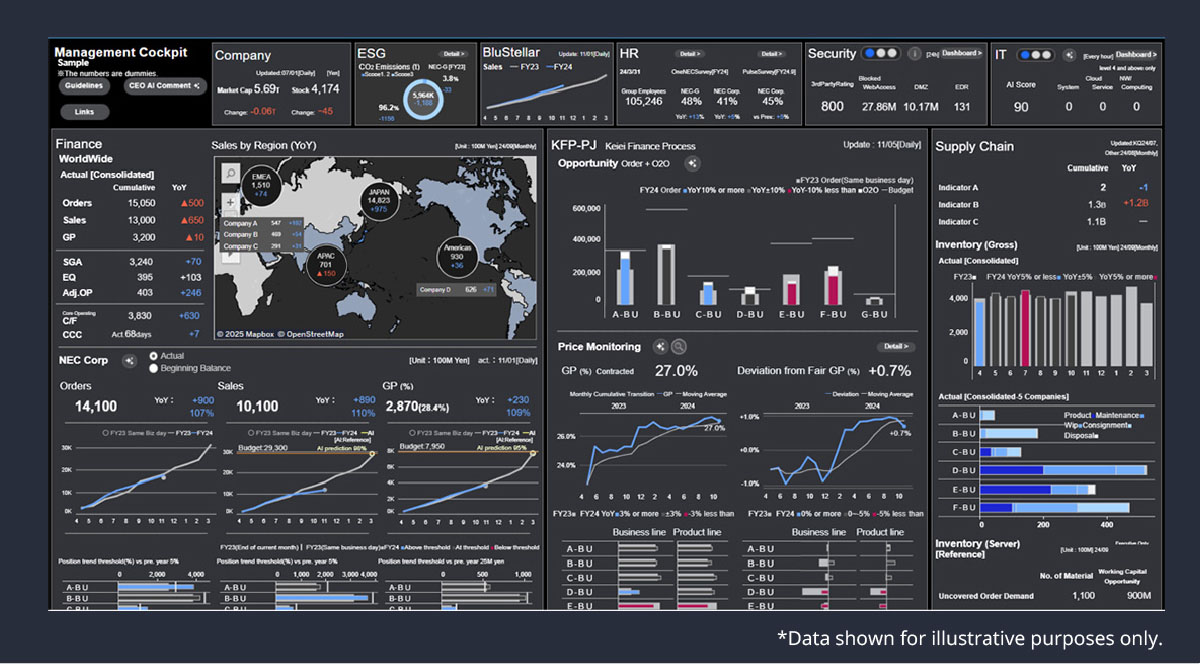
Breakthrough approach: We focused on thoroughly making quick wins visible. For example, we introduced a Management Cockpit and shared with employees the same information the CEO reviews daily, enabling highly transparent management. By accumulating a series of small successes and giving frontline teams firsthand experience that “trying it actually produced real results,” we encouraged a shift in mindset from criticism to collaboration.
3. Mechanism for Accumulating Practical Expertise and Creating Empathy
3.1 Creating value from raw, real-world experience
The true value of the Client Zero strategy lies not only in sharing success stories but also in acknowledging failures and openly sharing the raw, real world experiences behind them. NEC captures the challenges it faced and the ways it resolved them during internal DX and accumulates these as practical, “living” insights that serve as a source of empathy in dialogues with customers.
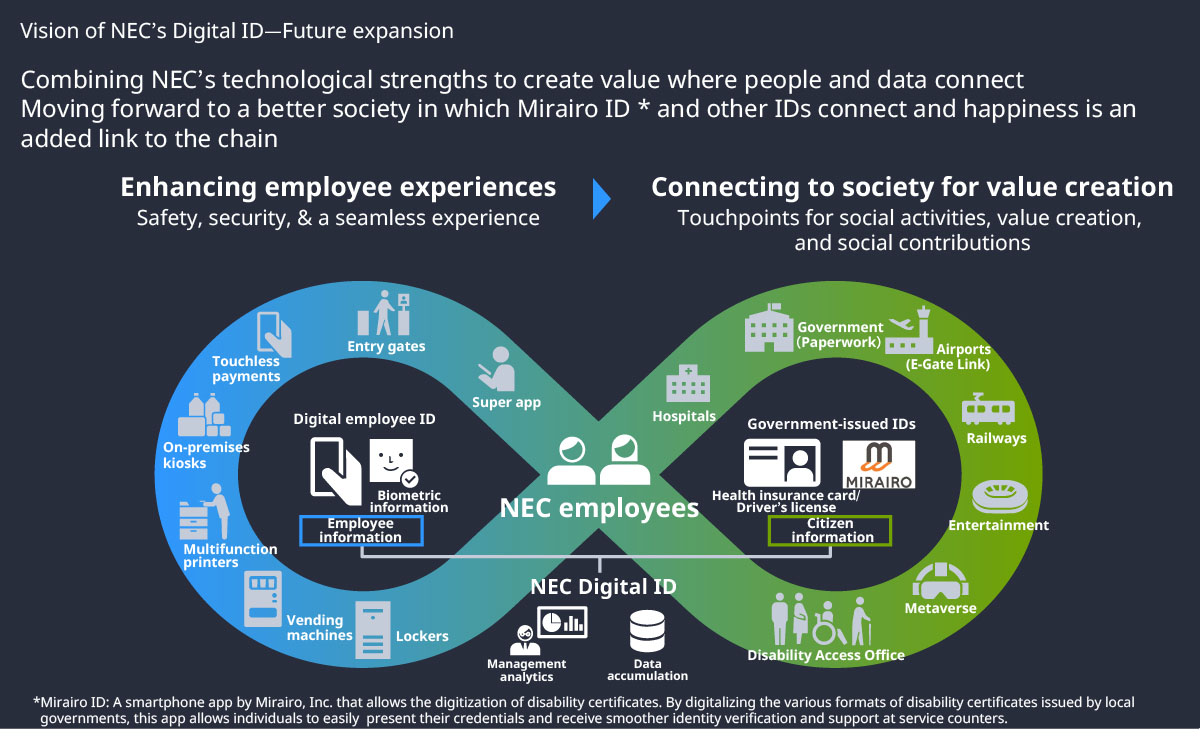
For example, when introducing our Digital ID solution, we encountered concrete issues such as improving accuracy for users wearing masks and expanding the range of environments where the solution could be used. The insights gained from these real world experiences now enable us to propose convincing solutions to customers facing similar challenges.
3.2 Creating Empathy in Customer Dialogues
In the course of our proposal activities aimed at addressing customers’ management challenges, we are increasingly asked, “How does NEC handle this?” By sharing our own transformation experiences, we have found that customers respond with empathy, which has reaffirmed for us that NEC’s own journey of change carries genuine value for them. This has led us to shift from technology centric proposals to empathy driven, problem solving approaches.
4. Shifting To Customer Value and Charting the Path to Practical Deployment
4.1 Systemizing practical expertise and sharing it externally
NEC has pursued digital transformation precisely because transforming itself was essential. Rather than keeping these efforts within the company, NEC aims to systematize the concrete challenges it encountered and the processes it used to resolve them, and to share these insights to support the DX initiatives of customers and society.
What matters is putting DX into practice through technologies and services, and thoroughly identifying the issues and solutions that only become visible through actual implementation. NEC is able to provide partnership-based, co-creative support across the entire transformation process not merely by offering technology, but because it has undergone the same struggles itself.
4.2 The Value of Client Zero in NEC BluStellar
The practical expertise gained through the Client Zero strategy serves as one of the key foundations of NEC’s value creation model, NEC BluStellar, which was announced in May 2024. The three core values delivered through NEC BluStellar—business model, technology, and organization and human resources—are structured as models shaped by NEC’s internal Client Zero practices and co-creation case studies with customers. What is especially important is that NEC BluStellar is not simply a provider of technology but realizes a cycle of value creation that spans the entire transformation process.
- (1)Internal practice: NEC itself, as Client Zero, rigorously validates cutting-edge technologies
- (2)Knowledge accumulation: Raw, real-world experiences, including both success and failures, are accumulated and systemized as practical expertise
- (3)Empathy creation: In customer dialogues, we make proposals grounded in these real experiences
- (4)Value delivery: Through NEC BluStellar, NEC positions itself as a transformation partner that goes beyond traditional systems integration
- (5)Continuous improvement: By co-creating with customers, we gain new insights that are fed back into our own practices
Through this cycle, NEC BluStellar functions not merely as a service brand but as a genuine value creation model underpinned by the practical expertise gained through Client Zero.
5. Client Zero as a Driver of Continuous Transformation
5.1 Company-wide transformation through the three pillars of internal DX and cross-functional capabilities
Through the Client Zero strategy, NEC is achieving continuous transformation along the following three pillars:
- (1)Workstyle DX: By leveraging digital technologies, we unlock the potential of our people and create a comfortable, modern work environment for all employees. This includes the use of NEC’s self-developed core AI technology, “NEC cotomi,” as well as OpenAI and Microsoft Copilot to improve operational efficiency, support decision-making, and enhance knowledge utilization—serving as an internal environment where employees can actively adopt and apply AI in their daily work (Fig. 3).
 Click to Enlarge
Fig. 3 Future vision for NEC’s Digital ID solutions.
Further details on our AI initiatives, including concrete examples and their impact, are provided in the paper in this special issue titled “AI Utilization within NEC: Advancing DX and AX through the Client Zero Strategy .”
- (2)Core operations DX: We are transforming the core processes that support our business by realizing data‑driven management and objectively confronting facts. This includes the implementation of data‑management practices, such as the realization of the KFP (Management Finance Process) Project (Fig. 4).
 Click to Enlarge
Fig. 4 Management Cockpit.
For a detailed explanation of the mechanisms and outcomes of data driven management—including the development of management cockpits, dashboards, and the establishment of a base registry—refer to the paper in this special issue titled “NEC’s Data-Driven Management Initiatives .”
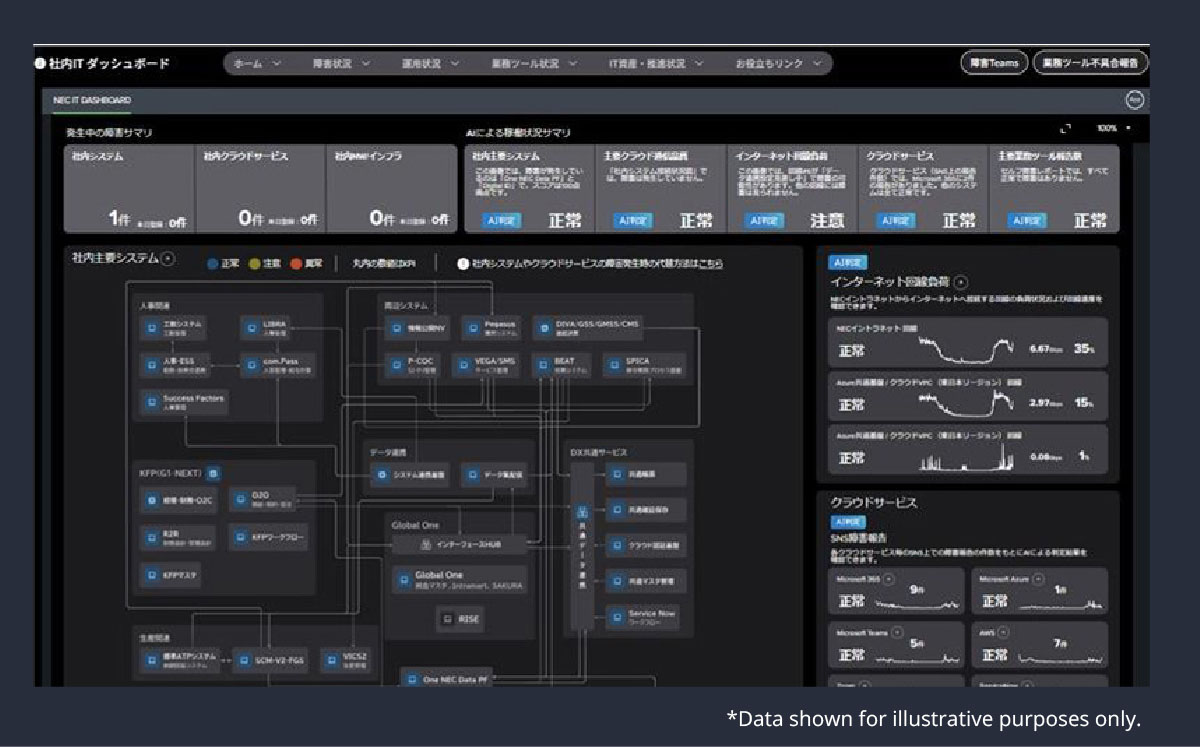
- (3)Operational DX: We are transforming IT operations through a digital‑native integrated operations model that uses digital technologies to unify processes previously dependent on manual work. This serves as a practical environment for strengthening cybersecurity and advancing modernization initiatives (Fig. 5).
 Click to Enlarge
Fig. 5 IT Dashboard.
Our initiatives involving AI-driven intelligent operations platforms and cloud migration are presented in this issue’s paper, "Promoting Modernization Through the Latest Technology and Next-Generation Models for IT Operations ," which describes concrete examples of automation and operational efficiency in practice.
These three pillars are supported by the following three cross-functional capabilities:
- 1)Integrated experience: To enhance employee productivity and workplace experience, we deploy standardized tools, automation, and integrated portals across the company, creating a comfortable and efficient working environment.
- 2)Data platform: Based on the principle of One Data, One Place, One Fact, we unify company-wide data to enable real-time analysis, accelerate management decision-making, and strengthen data utilization.
- 3)IT infrastructure and security: By implementing a hybrid IT foundation and Zero Trust security, we achieve both stable business operations and a high level of safety.
The Client Zero strategy serves as an integrated engine that drives internal practices across all these areas, providing the foundation and direction for the specialized initiatives detailed in each paper in this special issue.
5.2 Pathway to Social Value Creation Supporting NEC BluStellar
The Client Zero strategy provides the foundation for the social value creation that NEC BluStellar aims to achieve. By applying the practical knowledge gained from NEC’s own rigorous internal practice to the transformation of customers and society through NEC BluStellar, we seek to realize true digital transformation and contribute to a more sustainable future.
To fulfill NEC BluStellar’s philosophy of serving as a guiding beacon for people and society—shining like the brightest star in the night sky—the practical expertise derived from Client Zero is indispensable. What matters most is that this strategy is grounded in a mindset of focusing on what can be done. Rather than avoiding AI due to its risks, the commitment to creating value while actively managing those risks is the essence of the Client Zero strategy that supports NEC BluStellar.
As an integrated framework for company-wide transformation that transcends individual technology domains, the Client Zero strategy is essential to supporting the value creation delivered by NEC BluStellar.
6. Conclusion
The Client Zero strategy starts with NEC’s own internal implementation and, through a continuous cycle of accumulating insights, generating empathy, delivering value, and driving ongoing improvement, builds the sustained transformation capability that leads to genuine customer value. Grounded in a mindset of taking action on what can be done now, the strategy serves as the practical knowledge base behind NEC BluStellar and provides an integrated, company‑wide transformation framework that goes beyond individual technology domains.
By applying the Client Zero approach and continually iterating through challenge and learning, NEC will continue to create customer and social value through NEC BluStellar and lead future transformation.
Trademarks
- *Microsoft Copilot is a trademark or registered trademark of Microsoft Corporation in the United States and other countries.
- *ServiceNow is a trademark or registered trademark of ServiceNow, Inc. in the United States and other countries.
- *Google Cloud is a trademark or registered trademark of Google LLC.
- *All other company names and product names that appear in this paper are trademarks or registered trademarks of their respective companies.
Authors’ Profiles
KODAMA Hiroshi
Corporate Executive Vice President and CIO (Executive Officer)
Corporate Executive Vice President and CIO (Executive Officer)
KIMURA Yoshitaka
Executive Professional
Corporate IT System Division
Executive Professional
Corporate IT System Division