Global Site
Displaying present location in the site.
Thought Leadership Initiative Shaping the Future, Gathering the wisdom of the world and presenting relatable visions for social implementation
Vol.19 No.1 Special Issue on NEC BluStellar: NEC BluStellar Driving the Future of Digital Transformation — A Value Creation Model Pioneered by AI, Security, Data Management, and ModernizationThe NEC Group is currently promoting its thought leadership initiative to develop and present relatable future visions and push forward social demonstrations and implementation together with stakeholders. The Institute for International Socio-Economic Studies (IISE), an independent think tank of the NEC Group, is the driving force behind this initiative. With the advent of an artificial intelligence (AI) native society, where AI technology is widespread across the social fabric with people utilizing it organically, upon us, the IISE is driving the NEC BluStellar strategy and thought leadership initiative to help Japan shine on the world stage again. We interviewed Kumi Fujisawa, chairperson of the IISE, to ask about how the company would achieve this goal.
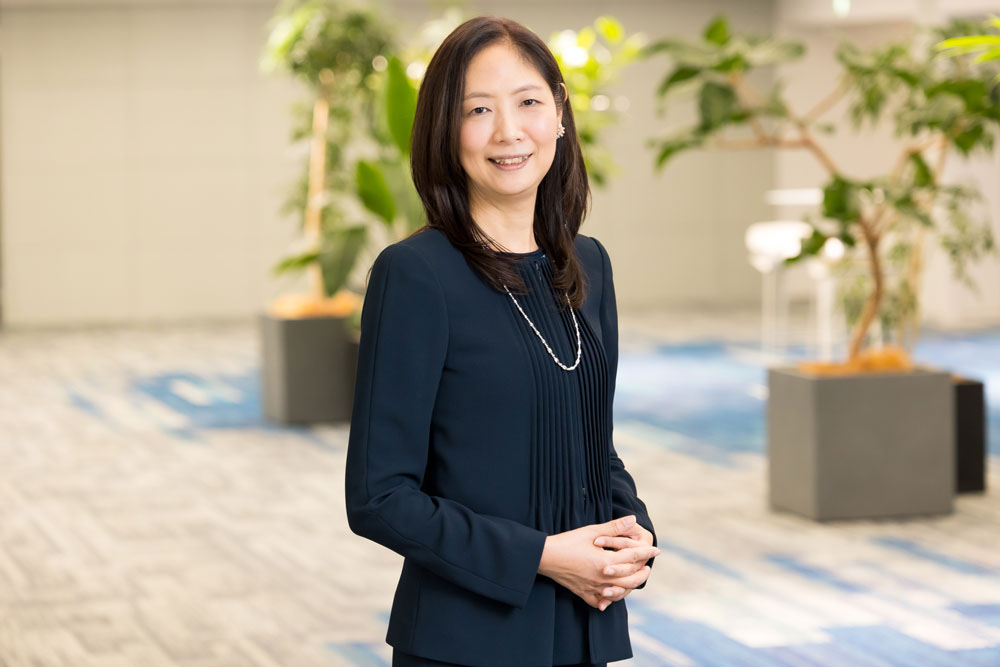
Chairperson of the Institute for International Socio-Economic Studies (IISE)
After graduating from Osaka City University (now Osaka Metropolitan University), Kumi Fujisawa began her career working for investment management companies both in Japan and overseas. In 1995, she founded Japan's first investment trust evaluation company, which she sold to the global credit rating agency Standard & Poor's in 1999. The following year, she participated in the establishment of the think tank SophiaBank , serving as its representative from 2013 through March 2022. In March 2020, Fujisawa graduated at the top of her class from the Graduate School of Sport Sciences at Waseda University. Since April 2022, she has held her current position as chairperson of IISE. In addition to public service roles such as council member for various government ministries and public-interest director for organizations including the Japan Securities Dealers Association, Fujisawa also serves as an outside director for listed companies such as Toyota Motor Corporation, Shizuoka Financial Group, and Mercari.
Social issues cannot be solved by a single company alone even if that company has excellent technologies
―― The Institute for International Socio-Economic Studies (IISE), an independent think tank of the NEC Group, is promoting the thought leadership initiative. First, please tell us about this initiative.
We define the thought leadership initiative as a structured process of envisioning the future, creating shared empathy around that vision, and carrying it through to social implementation.
The term "thought leadership" has been used primarily in the field of marketing overseas. A person who inspires and leads others by talking about ideas and thoughts like a visionary is called a "thought leader." What we call thought leadership is the act of building a future together with the thought leader.
The NEC Group intentionally uses the term ‘thought leadership initiative,’ positioning it as a management strategy that goes beyond thought leadership as a concept and emphasizes purposeful, action driven leadership.

―― Why is the thought leadership initiative important now?
NEC has excellent technologies, but these technologies are almost never used alone. Solving social issues and creating markets through technologies requires developing future visions and working with peers to make rules and figure out how to utilize the technologies. The thought leadership initiative is essential for implementing NEC's technologies in society in a desirable fashion.
The need for the thought leadership initiative is not limited to the NEC Group. We are now in the era of VUCA, which stands for volatility, uncertainty, complexity, and ambiguity. The future is unpredictable, and past knowledge and experience are no longer relevant. The thought leadership initiative involves presenting principled future visions and implementing those visions in society together with stakeholders who empathize with them. That's vital for companies to achieve sustained growth.
―― How different is the thought leadership initiative from traditional management strategies?
Ever since the digital revolution and the spread of artificial intelligence (AI) in particular, technology has been advancing at an accelerated pace. Conventional wisdom no longer applies, and simply formulating a strategy based on taking predefined steps to meet a predefined goal is no longer sufficient.
Previously, emphasis was placed on pointing out a single guiding star. Now, we are required to indicate entire constellations representing the future we envision with peers, because there is more than one goal in an inclusive future.
The need to be aware of ecosystems has long been advocated, but the digital revolution has made ecosystems bigger and more complex. Therefore, it is important to flexibly change our strategy in collaboration with a diverse group of partners from industry, government, and academia, and to consider how to shape the constellation together.
Building an AI-native society also requires insights from cultural anthropologists and philosophers
―― Of the social changes that are coming, the spread of AI will likely have a particularly huge impact. What kind of role will the thought leadership initiative play upon the arrival of an AI-native society?
In the past, when the internet began to spread, you couldn't go wrong if you imported businesses, services, and systems that were successful in the U.S. However, no one has experienced an AI-native society, and there is no model to follow. Technology is making rapid progress, with diverse future visions emerging simultaneously all over the world. These circumstances make the thought leadership initiative important.
If AI can replace humans, what kind of infrastructure should we have? Is it OK for us to follow all decisions made by AI? How should we interact with AI, and how should we control it? We have to consider what an AI-native society should look like, from ethical and multiple other aspects. Because this also demands deep reflection on fundamental issues such as “What does it mean to be human?”, it is essential to develop a rich and multifaceted thought leadership initiative involving not only government officials and policymakers but also cultural anthropologists, philosophers, and other experts.
―― The IISE is seeking to become a platform-oriented think tank. What exactly do you have in mind?
The role of a platform-oriented think tank is to provide opportunities for discussion indispensable for developing future visions. The future of an AI-native society is too vast to be shaped by NEC or IISE alone. It is important to gather knowledge from a wide range of fields across the globe.
Japan is better suited than any other place to discuss the future. The nation is technologically advanced and has a market backed by a fairly large population. It also has no strong religious bias. In terms of history, Japan has maintained the imperial system for 2,000 years in the closed environment of an island country, indicating that the country is adept at building a sustainable framework.
The uniqueness of Japan is now attracting attention at various international events like the World Economic Forum meeting in Davos. With language barriers now eliminated by AI, I think Japan is poised to make a strong showing in building a sustainable world.
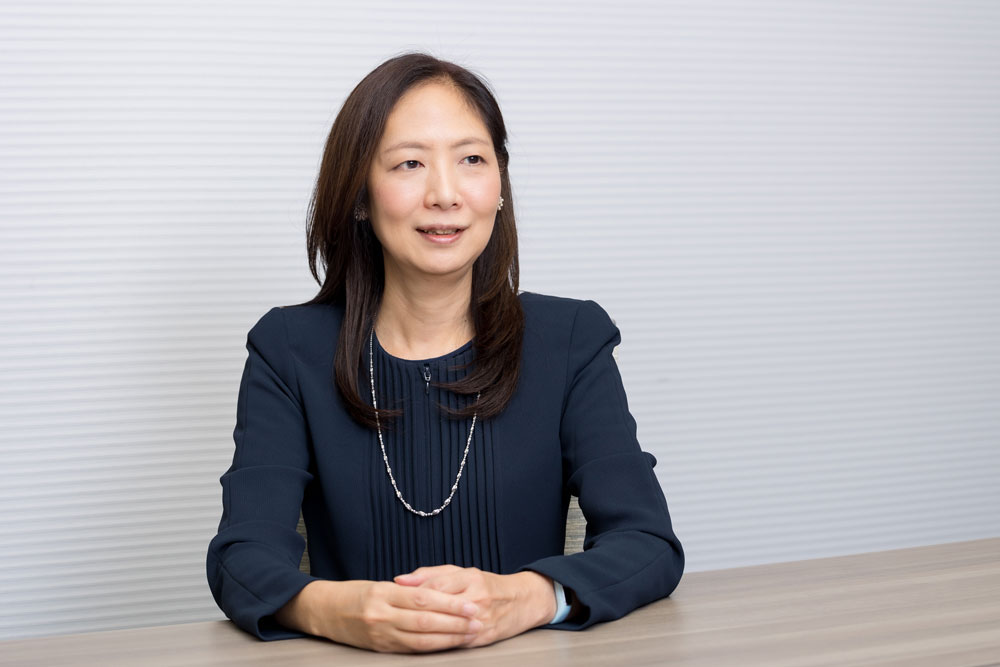
Discussion focused on the future of an AI-native society
―― Tell us about what the IISE is working on.
In fiscal 2025, we set up an advisory board for NEC's executives to create a forum for discussions with external experts on an experimental basis. They discussed three themes: "the future of an AI-native society," "the direction of a mobility society," and "the ideal form of platforms."
The external experts we invited to this advisory board were government officials engaged in AI rule creation, scholars studying AI governance, AI engineers, scientific journalists, venture capitalists, and health policy researchers. We intentionally invited younger experts--mainly those in their 40s--with whom NEC's executives had never spoken with before.
―― What are your plans for fiscal 2026 and beyond?
We intend to offer more opportunities for discussion, with the future of an AI-native society as the central focus, breaking it down into more specific topics for deeper exploration. I think that some themes lead to topics for thought leadership immediately, while others may take more time.
In the first year, we'll start small, laying the groundwork. In the second year, we'll implement our platform to a certain extent, and in the third year, through branding we aim to reach a state where it is recognized both domestically and internationally that the NEC Group is building a platform. That is our vision for the next several years.
When we delve deeper into AI, we face questions such as "What is intelligence?" and "Can AI have a mind?" While it's important to continue these philosophical discussions, I think we should avoid becoming preoccupied with such issues. Our goal is to build a future society or, in other words, develop new markets. We must always keep in mind the perspective of commercializing initiatives and generating profits.
Business leaders are struggling with what should be included on their management agenda
―― How can those who participate in the platform make use of the discussions held there?
There are various possible approaches. One way to utilize the discussions is to formulate your company's management strategy as you discover thoughts. Another is to use these discussions to validate your own hypotheses. It is also possible to gain business ideas or expand your network. Developing thoughts may help you identify challenges and eventually you may want to share your insights with the world and publish white papers or books.
These discussions are not only helpful for business leaders. For example, discussions may help government officials realize what kind of laws are necessary, and they can then set up a committee in their organization to craft that law. It is a platform, which means anything is possible.
―― NEC has launched NEC BluStellar, a new value creation model to support corporate transformation. How do you tie the thought leadership initiative to NEC BluStellar?
NEC BluStellar is a value creation model whereby NEC's consultants assist customers in addressing their management agendas by offering comprehensive support from strategy development through implementation. In Japan, there are many companies without a clear picture of their management agenda.
Serving as an outside director and advisor to multiple listed companies, I often observe business leaders struggle with what should be included on their management agendas as they are exposed to various news reports in a rapidly changing world. When I used ChatGPT to categorize the purposes and visions of the top 50 companies by market capitalization, I found that the purposes and visions of 48 companies--excluding Toyota Motor Corporation and the Sony Group--were consolidated into just five categories. This suggests that, because many business leaders are facing similar challenges, their companies end up with similar purposes and visions.
The IISE offers opportunities to access a wealth of knowledge from across the globe, helping customers recognize their true management agendas and figure out optimal strategies. NEC participates in discussions with customers to identify their needs, develop strategies and tactics, and propose those strategies and tactics through its consultants. I hope to see both the IISE and NEC fulfill their respective roles.
Be prepared with the drive to better yourself
―― What are the challenges you face in undertaking the thought leadership initiative?
What I think is most needed is for NEC Group employees to further upgrade their skills and abilities as they will play a central role in the thought leadership initiative. Since this initiative involves developing future visions through discussions with experts from around the world, everyone, myself included, should study hard and gain more expertise. It is crucial for us to be prepared to better ourselves. Currently, we are seeking individuals who are excited and motivated to take on this huge challenge.
I served as a moderator for the experimental discussions we held in fiscal year 2025, but from fiscal year 2026 onward, we will also invite external participants to join us. It is my hope that NEC Group employees, in particular, will learn from being involved on the operational side. We intend to work with NEC's Human Resources Division to make participating in operations a part of the human resources development program.
―― The IISE's mission is to illuminate the future with the wisdom of the world. How do you envision the future?
Looking at the evolutionary tree of living organisms, we can see that species have continuously branched out from the original primitive cells at the root of life. Evolution is not only about the strongest surviving; rather, it means a transition to a state in which a diverse range of organisms can exist. There doesn't need to be only one vision for the future, but I would envision the future as a society where everyone can enjoy happiness regardless of the country, region, or community they live in.
In ancient times, people connected the stars scattered across the night sky to form constellations. They decided when to sow seeds and which direction to travel according to the movements of these constellations. Our mission is to connect the countless pieces of wisdom dispersed throughout the world like constellations, and present them as guideposts.
The role of the IISE is to connect the stars, while NEC BluStellar’s role is to show the pathways toward those constellations. Those who look at a constellation will decide what they want to do and move in the right direction. That is the vision we have in mind. The IISE will further strengthen our collaboration with NEC to make Japan a stronger, more dynamic country that can demonstrate leadership on the world stage.
―― Thank you very much.
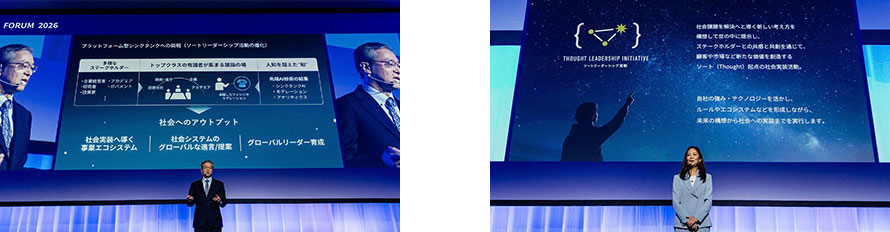
The International Institute for Socio-Economic Studies (IISE) is an independent think tank of the NEC Group that leads the creation of future social value through the accumulation of global knowledge. IISE shares unique information that fosters future empathy, including introductions to our thought leadership activities, event reports, and columns. We invite you to take a look.
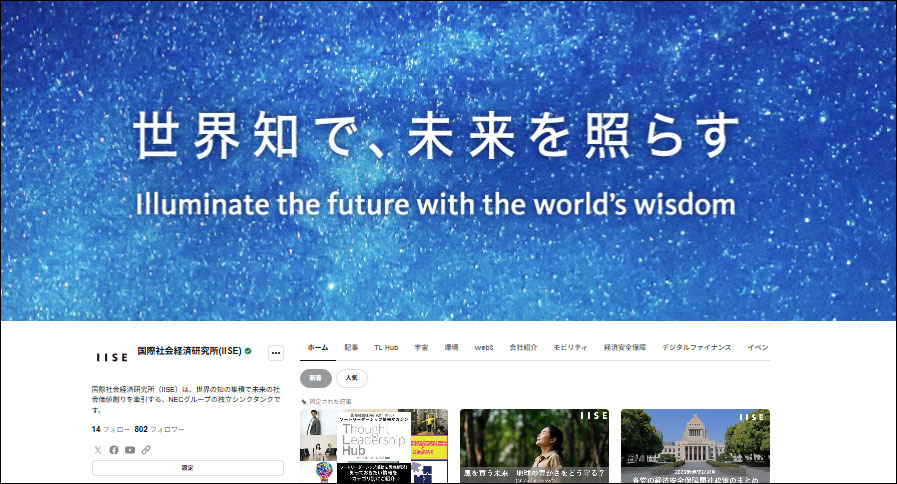
 IISE|note (Japanese)