
Global Site
Breadcrumb navigation
Topics
October 16, 2025
Introducing Yuichi Nakamura, Principal Technical Officer, at the forefront of standardization and rulemaking
Yuichi Nakamura
Chair, Japan’s National Mirror Committee for the ISO/IEC Joint Technical Committee (JTC) 3, an international organization that develops global standards on quantum technologies
Principal Technical Officer, Research & Development Division, Global Innovation Business Unit, NEC Corporation
Quantum technology is advancing rapidly. Today, not only technological development, but also the promotion of rules and standardization is recognized as a key factor that will significantly impact the future of industry and society. To demonstrate Japan's technological capabilities and reliability on the global stage, efforts toward international standardization are steadily progressing.
In this interview, we spoke with Yuichi Nakamura, Principal Technical Officer at NEC, who is Chair of the Japan National Mirror Committee for ISO/IEC JTC3, about the current state and future outlook of quantum technology standardization.
■Article Summary
- Quantum technology has been designated as a strategic area in the New International Standards Strategy, formulated by Japan’s Cabinet Office.
- The Joint Technical Committee 3 (JTC 3) was established by ISO and IEC in January 2024 as a committee dedicated to promoting international standardization in the field of quantum technologies.
- Yuichi Nakamura of NEC's Research & Development Division was appointed as the first chair of Japan’s National Mirror Committee.
- International standardization activities are being promoted in line with the government's standardization strategy.
- In May 2025, Japan successfully hosted the meeting, contributing to the development of an international standardization review framework
Profile
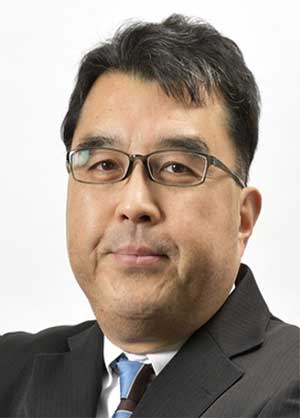
Yuichi Nakamura
Principal Technical Officer
Research and Development Division
Yuichi Nakamura joined NEC in 1988 and has been engaged in research and development of hardware and software for semiconductor design tools, embedded systems, HPC, and submarine optical cables. Since 2013, he has served as Director of the Green Platform Research Labs, Director of the System Platform Research Laboratories, and Executive Director of the Central Research Laboratories.
He is currently the Principal Technical Officer of the Research & Development Division and serves on several government committees related to quantum technology, including Japan’s Cabinet Office’s Quantum Technology Innovation Council.
Even with limited experience in standardization activities, it is possible to make a significant contribution if you have technical expertise and enthusiasm
Please tell us about your experience with standardization activities.
In the field of quantum technology, discussions on international standardization have only just begun, so there are very few standardization experts worldwide. I myself had little experience in being involved in standardization activities until now, but my knowledge of quantum technology and experience in organizational management were highly valued, and with cooperation from the government, national research institutes, and other relevant parties, we were able to advance discussions on international standardization.
Standardization provides transparency for users when selecting services and products
What is happening in the international standardization of quantum technology within ISO/IEC JTC 3?
ISO/IEC JTC is a Joint Technical Committee for international standardization, jointly operated by the International Organization for Standardization (ISO) and the International Electrotechnical Commission (IEC). JTC3 is the third such committee to be established. The scope of standardization mainly covers quantum computing, quantum simulation, quantum sources, quantum measurement, and quantum detectors. This is a new committee established just over a year ago, with the British Standards Institution (BSI) as its secretariat. In 2025, Japan’s National Mirror Committee, chaired by me, successfully held an international conference in Tokyo. At the Tokyo meeting, five important working groups (WG) were newly established and contributed to consensus building:
WG on Quantum Sensors
WG on Quantum Computing Benchmarking
WG on Quantum Computing Supply Chain
WG on Quantum Random Number Generator
WG on Practical Quantum Technology
As you can see from this list, the field of quantum technology is extremely broad, so standardization will proceed from areas where it is most needed. The working group on Quantum Computing Benchmarking was established at Japan's proposal. This working group will standardize methods for measuring quantum computer performance, preventing issues such as uncertainty about how catalog values are measured, numbers favorable to specific suppliers circulating independently, and catalog specifications diverging from actual performance. Japan has an advantage in performance measurement technology and will lead and accelerate standardization efforts.
Promoting activities in line with the government's standardization strategy
What kind of activities do you undertake as Japan’s Committee Chair? Quantum technology was designated as one of the strategic areas in the New National Standardization Strategy established by Japan’s Cabinet Office this June. Has this designation had any impact?
As Japan’s Committee Chair, my main role is to consolidate the opinions of Japanese industry and lead discussions on the direction of standardization activities at international conferences. To this end, I regularly hold meetings with government officials and various stakeholders, continuously obtaining feedback on the direction of standardization activities. In addition, in my position as Japan’s Committee Chair, I serve as the head of delegation (HoD) for Japan, which gives me the opportunity to engage directly with HoDs from other countries and to participate in international meetings that a single Japanese company would not be able to attend. For example, the HoD for the United States is from National Institute of Standards and Technology (NIST), and I have found the insights shared on standardization and rulemaking to be highly stimulating.
The designation of quantum technology as a strategic area in the New International Standards Strategy has brought about changes beyond making it easier to receive funding for activities. There is also a sense of reassurance that the government is supporting these efforts, and I have noticed an increase in contacts from startups and more organizations joining our activities. Please look forward to further public-private international standardization activities going forward.
Summary
The international standardization of quantum technology has just begun, with the establishment of working groups now agreed upon and discussions finally underway. As these discussions progress, there may be occasions where we will need the cooperation of Japanese stakeholders who possess relevant technologies. When that time comes, we kindly ask for your support. As Japanese experts in quantum technology, we will continue to contribute from the perspective of international standardization, aiming to maximize Japan's national interests and clarify the ideal path for the widespread adoption of quantum technology. We appreciate your continued support.
- *Affiliations and job titles are as of the time of the interview.