
Global Site
Breadcrumb navigation
Automatically Analyzing the Risks of Increasingly Sophisticated Dis/Miss Information with LLMs and Agentic AI
Technology for the analysis of disinformation and misinformation
Featured Technologies February 24, 2026
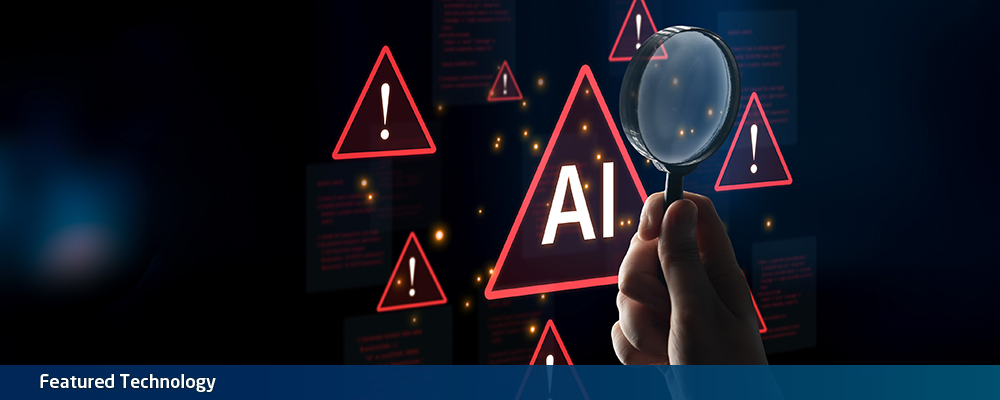
Due to rapid advances in generative AI in recent years, it has become possible for anyone to easily create elaborate images and videos. However, at the same time, this has also led to problems such as circulating fake images and videos of any individuals to manipulate public perception and spreading false rumors to sow confusion among people and increase content views. To address these problems, NEC is using AI technologies and LLMs to develop methods aimed at the analysis of disinformation and misinformation. To learn more, we spoke at length with several researchers about this technology, which is capable of verifying text, images, audio, video, etc. in an integrated manner.
Shortening the investigation time from 2 hours to 5-10 minutes
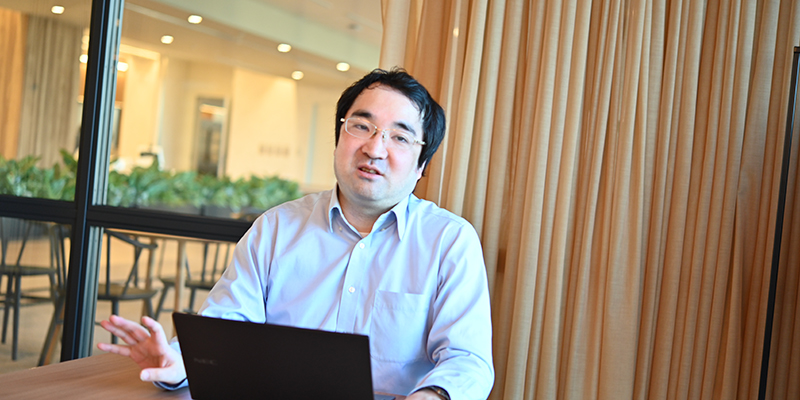
Lead Research Engineer
Secure System Platform Research Laboratories
― What kind of technology is disinformation and misinformation analysis?
Furukawa: This technology uses a portfolio of AI technologies to analyze the possibility that a given information input is disinformation or misinformation and automatically generate a report with an LLM. In addition to being capable of handling a wide range of data formats and combinations including text, images, audio, and video, it also features the ability to automatically design the optimal analysis workflow using Agentic AI. It enables highly accurate checks to be performed with a high level of efficiency comparable to a professional.
In recent years, economic and social harms have occurred as a result of information flooding social media such as disinformation designed to manipulate financial markets and misinformation that interferes with the proper flow of information during disasters. This situation has become such a major global issue that some reports (Note) have identified it as the greatest risk based on a short-term perspective of one to two years.
Our research group is a team that is dedicated to researching technologies to address new threats posed by AI, and we operate at the intersection between security and AI.
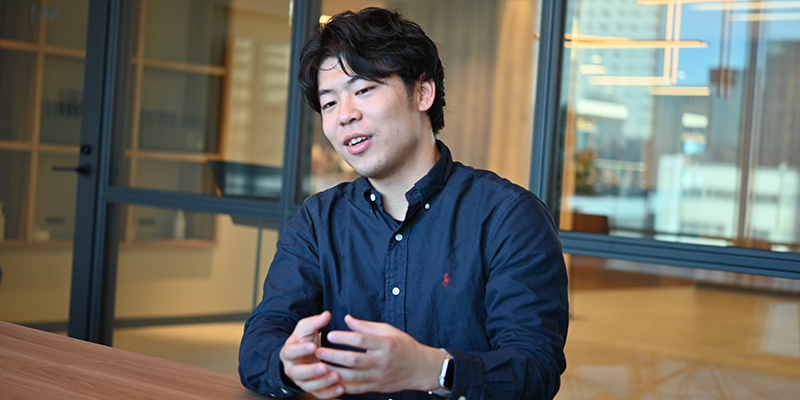
Special Researcher
Secure System Platform Research Laboratories
Matsunaga: Disinformation and misinformation are becoming increasingly sophisticated and diverse due to recent advancements in AI and LLMs. There are many cases in which nuance may change based on slight differences in combinations of images and text such that verification technologies specifically aimed at images, video, or text are no longer sufficient. There was a need for a system that could collectively verification various data formats to verify their underlying meaning and supporting evidence.
Furukawa: So right as we were considering the core concept of a system that could analyze video and text, etc. regardless of the data format and preparing to begin research and development, the Ministry of Internal Affairs and Communications initiated a public call for the “Development and Demonstration Projects for Countermeasure Technologies against Dis-/Mis-information on the Internet.” NEC subsequently joined this bidding process and has been developing a practical system to address this problem.
Kakizaki: In terms of the system, we built it as a flexible framework that is designed to combine various NEC AI technologies and open-source engines. Using a structure that integrates the appropriate engine as needed, we can avoid system obsolescence by adding or replacing AI technologies and LLMs at any time as they continue to advance at tremendous speed. Furthermore, this also enables flexible configuration changes according to usage scenarios, which allows us to rapidly respond to new threats.
Furukawa: We currently envision using cases such as fact-checking information circulating on social media for news organizations and utilization by local governments during disasters. In demonstration experiments, practitioners involved in fact-checking on a daily basis were able to complete roughly two hours of work previously required to collect evidentiary information in five to ten minutes. We have verified that this technology can contribute to significant improvements in efficiency.
- Note:Excerpted from the “Global Risk Report 2025” issued by the World Economic Forum.
Converting images and video into text for integrated analysis using an LLM

Senior Researcher
Secure System Platform Research Laboratories
― How does this technology incorporate NEC's unique characteristics?
Kakizaki: The first characteristic is the capability of the technology to verify multimodal content in an integrated manner regardless of the data format. In the typical approach, information must be analyzed according to the data format using dedicated technologies for images and video. However, our technology first converts all data to text to enable analysis by an LLM regardless of the data format or the particular combination of data. Not only was this concept accepted for the Demonstration Program of the prestigious AAAI 2025 international conference, but I myself was honored to be selected for inclusion in the “Innovators Under 35 Japan” by the MIT Technology Review (reference:  https://www.technologyreview.jp/l/innovators_jp/371995/kazuya-kakizaki/).
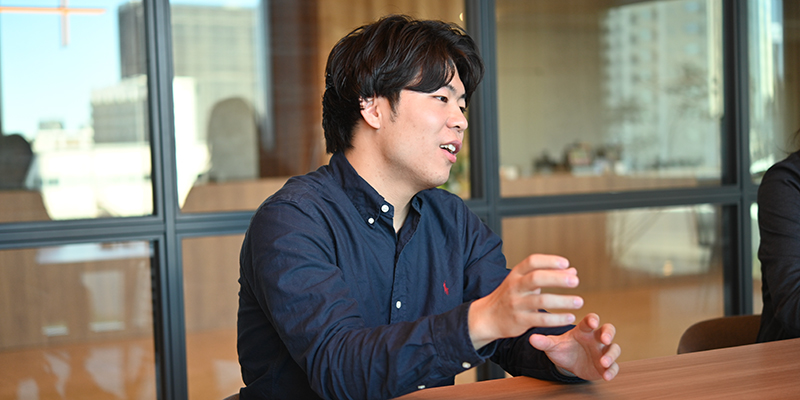
Matsunaga: We convert all modalities into text, which is easy for an LLM to handle, and extract the claims and details that need to be verified from the content. Then we build on that by verifying signs that the images or videos were generated or processed as well as broadly searching for evidence that supports the claims and confirming its reliability.
Kakizaki: The system cites the evidence sources to provide reliability feedback to the users. Because the question of whether a source is a primary source is an important criterion in determining if information is true or false, we are currently working to implement a mechanism that continues to search until it reaches a primary source.
Matsunaga: In addition, we developed and incorporated Agentic AI to realize a system that selects the necessary tasks and runs efficiently instead of following a fixed, predetermined pipeline. For example, in cases where it is better to perform deepfake detection first, it will function in that way. If the results of a web search indicate the need for a separate search, then it can run an additional search. Furthermore, if the input information from the user is insufficient, it can ask questions as needed to clarify what should be checked, which allows for an efficient investigation flow to be designed in a flexible manner.

Kakizaki: Because we combine many engines including the deepfake detection of people’s faces and voices, claim extraction, and evidence retrieval, running every process each time would be slow and increase the amount of redundant information, which would make it more difficult for the LLM to decide. Agentic AI provides the benefit of performing efficient and detailed fact-checking using only the necessary processes in the right order according to the purpose and application like a professional expert.
Matsunaga: Furthermore, Agentic AI effectively handles the process of swapping engines, which offers the additional benefit of ensuring smooth replacement.
Furukawa: Our team has long focused on security issues, so we are always thinking about ways to swiftly respond to new threats. I think that this posture is also reflected in the framework of the current system.
Targeting automatic risk detection and information analysis
― Please tell us about the future prospects and possibilities for this technology.
Furukawa: This technology is still in the research and development stage, so we would first like to move forward to ensure that we can properly deliver it to customers as a product or service. One target is to release it by the next fiscal year.
Matsunaga: When considering practical implementation, we believe that various adjustments will be needed. For example, the usage and objectives may change depending on the user. While the primary objective for news organizations will be to check the authenticity of information, local government operations will likely focus on accurately understanding what is happening based on information on social media when an incident or disaster occurs. We intend to make adjustments to ensure a high degree of accuracy while covering such a wide range of applications.

Kakizaki: Because the types of evidence required differ for each application, the planning process deployed by the Agentic AI will also vary slightly. It seems that we also need to consider a mechanism that autonomously improves based on the user application and usage history.
Furukawa: In addition, while users enter each piece of information to check the credibility in the current system, we are also considering ways to automatically detect abnormal trends while monitoring the overall flow of information in the future. If we can make it possible to automatically detect information with questionable credibility without user input and monitor the overall flow of information instead of individual pieces of data, that should allow us to obtain new insights. We plan on researching such possibilities with a view to collaborating with other research teams.

NEC’s technology for the analysis of disinformation and misinformation, which analyzes the reliability of input data and automatically generates reports, is characterized by its ability to handle multi-modal data such as text, images, audio, and video. The core of this technology is the concept of first converting data of any modality into text to perform integrated analysis with an LLM. This concept was accepted for inclusion in the Demonstration Program of the prestigious AAAI 2025 international conference. In addition, it enables efficient investigations based on user intent and objectives by embedding Agentic AI into the system. In demonstration experiments conducted by fact-checking practitioners, the system successfully completed tasks required to collect evidentiary information which previously required roughly two hours in five to ten minutes. NEC has verified that this technology can contribute to significant improvements in efficiency.
- ※The information posted on this page is the information at the time of publication.
Reference material