Global Site
Breadcrumb navigation
Shaping the Future - Next-Generation Research:Nobuhiro Ueda
April 8, 2026
Accelerating Social Implementation of LLMs
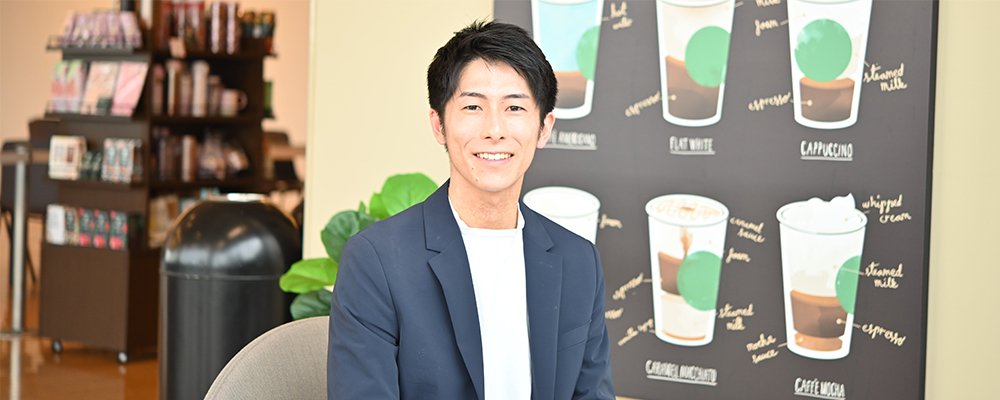
Nobuhiro Ueda
Representative Member
Knowledge Science Research Laboratories*
Ueda worked on research in natural language processing and the Vision & Language area in university. In April 2024, he joined NEC after withdrawing from graduate school with research guidance approval. In 2025, he completed his doctorate program upon writing a doctoral dissertation in parallel to working at NEC. After joining NEC, Ueda engages in technical research for adopting large language models (LLMs). He works on the development of the graphic context understanding technology for NEC cotomi (Note 1), which automatically converts Web pages, manuals, academic papers, slides, posters, reports, and other data into a form that is easier for the LLM to process, and further enhancement of its performance. Ueda has presented his research at the Conference of the European Chapter of the Association for Computational Linguistics (EACL 2026) and the 32nd annual conference of the Association for Natural Language Processing (NLP2026) in Japan.
- *This article is based on an interview held in March 2026.
The Data Science Research Laboratories (as it was called at the time of the interview) was later renamed to Knowledge Science Research Laboratories as a result of organizational restructuring.
Both technologies—for creation and for applying—are essential for LLM development
My interest in NEC as a potential employer sparked when I saw the news about their development of an original large language model (LLM) “cotomi”. It was when the innovation of LLMs was becoming a hot topic that I started to think about my career path. I studied natural language processing, Vision & Language, and other aspects in the area of AI in university, so I had a strong interest in LLMs. The problem is, LLM development requires massive resources. While I was thinking that research in LLMs would be difficult in academia considering its scale, I came across this news. As I looked further into the company, I learned that NEC has one of the most abundant computational resources in Japan, in addition to its employees who have rich knowledge and experience, and decided to join the company.
Since joining NEC, I have been working on the development of core technologies for the graphic context understanding function (Note 1), which automatically and accurately reads visual documents. The graphic context understanding function automatically converts any data, be it from a Web page, manual, academic paper, slide, poster, or report, into text data that can be taught to an LLM. This was created by adopting NEC’s proprietary learning data and is already commercialized. I believe this can be an essential platform technology for promoting the application of LLMs.
LLM development is currently in a stage where an approach from “how to apply LLMs” is critical. Overseas big techs are using incommensurable resources to develop universal, large-scale LLMs. However, any upgrade to make it smarter won’t immediately make our life better. We also need to develop technologies for effectively applying LLMs in parallel to such upgrades. We are currently setting our eyes on the development of such technologies.
Upgrades in LLMs can make our technologies smarter by simply replacing the existing models. I believe instead of repeating the endless race to upgrade LLMs, it is more useful in the long term to conduct research on such technologies.
Furthermore, NEC has many clients in different industries and sectors, with whom the company has a very close relationship. It therefore has an environment where researchers can hear customers’ opinions and feedback first-hand. This is a huge advantage in tackling the problem of “how to utilize” LLMs.
Pursuing research that leaves a long-term impact
AI is an area of research that advances at a rapid pace. Paradoxically, I am aiming to research and produce something that “doesn’t rot easily”. I want to conduct research that makes an impact on society and the research community that lasts three years—maybe even ten.
When I read various research papers, I often find technologies that provide outstanding accuracy, but are built using very difficult methods. Moreover, I also see papers that tune a small part of such difficult methods and claim achievement by surpassing the predecessor’s score. However, such research mostly tend to be short-lived. Difficult technologies take time to make it out into the world. Because they are built on difficult existing technologies, they rely heavily on those technologies and thus are prone to early obsolescence.
On the other hand, innovative, impactful technology like LLMs is rather extremely simple. LLMs are commonly explained as “something that predicts the next word.” In essence, LLMs are very clear and straightforward. When such simple methods emerge, they quickly replace difficult ones. For that reason, it is important to seek improvements in such a way that only grasps at the core of existing technologies without relying on them substantially. This is what I am consistently mindful of when I decide on a research topic or direction.
Producing greater value with systematic research within the organization
What I found interesting about NEC when I joined the company was that research themes were systematized within the organization. In university, our primary goal basically tends to be to do “good research” and contribute to the academic community. At NEC, in addition to doing “good research,” we also need to focus on how to create synergy as an enterprise. There are big goals—to be achieved by a group or as a whole company—and there are technologies that are currently missing or insufficient, but need to be developed or improved in order to achieve those big goals. A researcher then decides to pursue research that improves these technologies, in line with their interests and areas of specialty—your research functions as a component of the bigger goals. For example, the graphic context understanding function, which I am working on, is a technology that is aimed at making a world where LLMs automatically process all kinds of data a reality. The charm of this process is that you create greater value and solutions with your own hands through synergy with other groups. You see the vision of what your research is trying to achieve. The bigger goals can be your guide for deciding the direction of your research theme, as well as give you stronger motivation.
My future goal is to become a researcher who can make a solid impact on society, research community, and customers. In recent years, while the number of research papers continues to increase globally, research achievements that are actually impactful are quite limited. Amid such circumstances, while keeping my focus on essential research, I would like to conduct research that people comment ten years later: “We have this technology now because there was Ueda’s technology.”
- *The information posted on this website is the information at the time of publication.
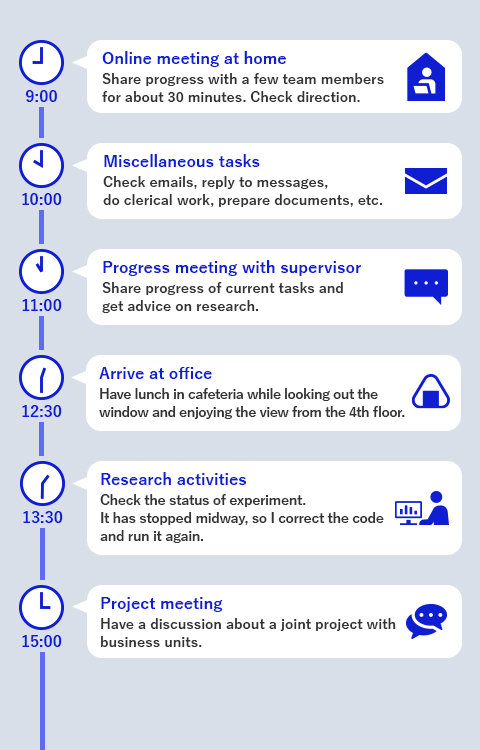
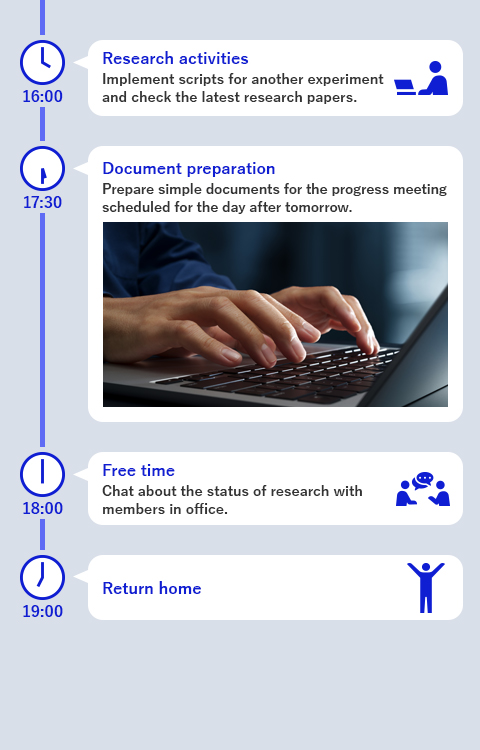
A day at work
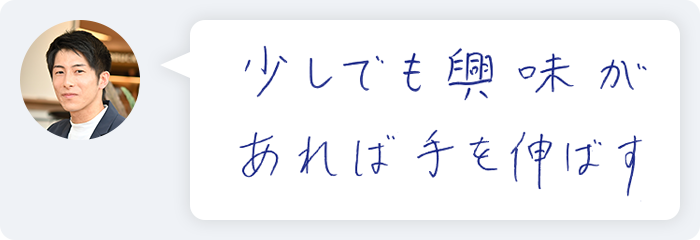
Message to my past self in my school days
Private column
I make hand-dripped coffee every day. I enjoy exploring good coffee while changing the beans, grind size, hot water temperature, and extraction time. Likewise machine learning models, coffee also clearly shows the results of any changes in the parameters. You can keep notes in an app so that you can repeat it. The delight you feel when an improvement attempt proves successful may be similar to that from model development (laughs).