
Global Site
Breadcrumb navigation


Public Safety
Safety and convenience, hand in hand
Balancing the need for water-tight security and optimum convenience is the key to successfully navigating the disruptive waves of torrent technological advances and rapid urbanization, the sweeping impact they have on our lives, and the risks and threats they pose.
We are extremely proud of our world-leading biometrics authentication, AI technology, video analytics and system integration capability, and our NEC Safer Cities strategy. This winning technology skillset has enabled us to tailor convenience-sensitive solutions for many different security scenarios and public safety challenges worldwide. Walk-through airport check-in and customs, citizen and digital ID systems for secure identification and fair service access, to name just a few.
We believe, with the right technology mix and solution expertise, safety and convenience can go together. Indeed, that's the only way to steer today’s complex data-driven world to its ultimate destination: the realization of a safe, secure, equal and efficient global society.
Leveraged ICT solutions enable to provide citizens safe, secure, fair government services.

Government
Predictive identification system that solves crimes and saves lives.

Law Enforcement
A seamless, efficient, and safe travel experience with NEC’s comprehensive solutions.

Aviation
A swift, personalized and frictionless customer experience across all industries.

Customer Experience
Seamless experience, safe environment by sophisticated AI, video and data analytics.

Venue
Providing robust protection through an advanced video analytics, and multi-modal biometrics.

Critical Infrastructure
Advanced solutions for secure and seamless financial services for digital-first banking.
Finance
NEC solutions are successfully serving many future-looking companies and nations across the globe.

Case Studies
Why NEC?
World’s No.1
NEC’s face recognition technology delivers the highest standard of authentication accuracy available on the market*

Global Team
Our 254 global entities can provide support to anyone, anywhere

Innovation Leader
$2.6 billion invested globally annually in company-wide R&D

- *NEC ranked No.1 several times as the world‘s most accurate face recognition technology in vendor tests conducted by the U.S. National Institute of Standards and Technology (NIST). Results shown from NIST do not constitute an endorsement of any particular system, product, service, or company by the U.S. government.
Awards & Accolades
Ranked # 1 several times for Automated Fingerprint Identification Systems (AFIS), Face Recognition and Iris Recognition
NEC's state-of-the-art biometrics algorithms have been validated by the U.S. National Institute of Standards and Technology (NIST) in a comprehensive range of tests from small one-to-one verification to large-scale high-volume identification matching.

Ranked as a Market Leader in the Frost Radar™: Biometrics Authentication Solutions, 2022 Benchmark
NEC has been named a Biometrics Solutions Leader by Frost & Sullivan for the second consecutive year, achieving the highest rankings in both Growth and Innovation indices.
Ranked # 2 in TIME Magazine's list of the "World's Most Sustainable Companies of 2024"
NEC was found to be a pioneer in sustainability not only across measurements such as Scope 1 and 2 emissions and energy consumption relative to company size, but also incorporating sustainability into its business model.

Thought Leadership Content & Customer Stories


Related Links
Biometric Authentication
Learn more about NEC’s full suite of biometric authentication technologies, including face, iris, fingerprint, palmprint, voice, and ear acoustic authentication, all of which rank as world class.

Face-to-Face with NEC Global Leaders
Hear from NEC's global leaders strategically deploying biometric technologies to address the challenges of their respective markets to create maximum value for stakeholders.
Smart Transportation
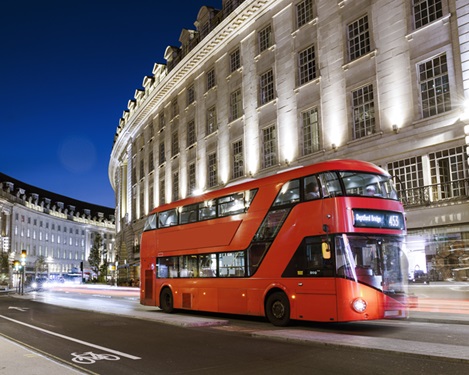
Get to know NEC's urban mobility solutions and services that leverage operational management and data analysis to enhance passenger engagement and safety.

Contact