
Global Site
Breadcrumb navigation
New Horizons - Career Change Research:Masakazu Hirokawa
February 24, 2026
Transitioning from University Assistant Professor to NEC
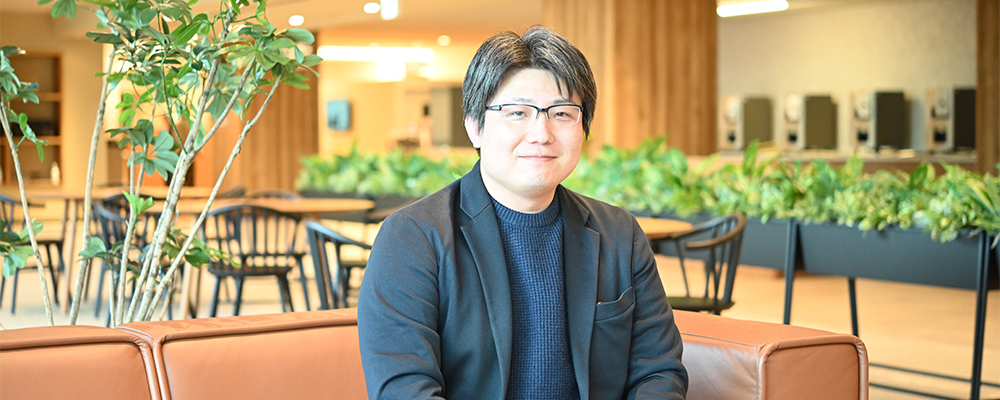
Masakazu Hirokawa
Professional
Data Science Laboratories
After earning a PhD (Engineering) in 2014, Hirokawa applied his knowledge of informatics and mechanical engineering to research and served as an Assistant Professor at a university. Later, he joined NEC in April 2023. He is currently researching and developing MLOps, which is a technology that maintains AI and machine learning performance while optimizing costs. In 2024 and 2025, he received the Best Paper Award at the International Conference on Information Visualization (IV).
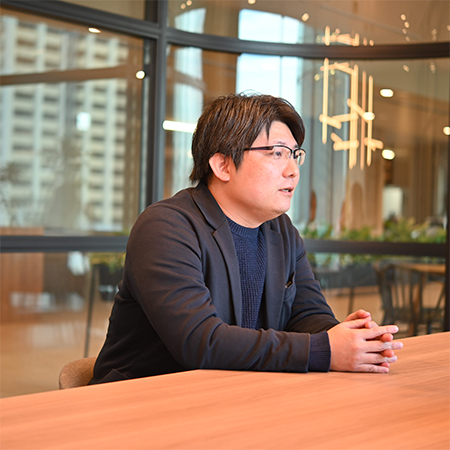
Maintaining a dual role at NEC and as a visiting researcher at a university
I joined NEC after serving as an Assistant Professor at a university. After being in the same department since my undergraduate days, I wanted to gain exposure to new forms of knowledge and experience in a different environment. Believing that expanding my professional breadth would eventually lead to a significant career advancement, I decided to take the plunge and make a career change.
I also wanted to tackle the challenge of bringing a technology out into society. In university-level research, even if you produce some interesting technology, it often ends with the release of the research paper. I was left with a sense of frustration as I watched promising research technologies fall short of practical application as students graduated. In recent years, there have been some people who have launched start-ups from universities to deploy products and services, but their numbers are still small. In contrast, corporate research laboratories have established a foundation and frameworks for releasing technologies into the world as services, so I thought that the corporate world might be an interesting place to release many technologies into society.
It has been about three years since I joined NEC, and as of January 2026, I am still affiliated with the university as a visiting researcher. I maintained this dual role to fulfill my ongoing responsibilities to my students, including serving as a co-advisor for their theses. NEC has an internal system to handle such situations, which enabled a smooth transition.
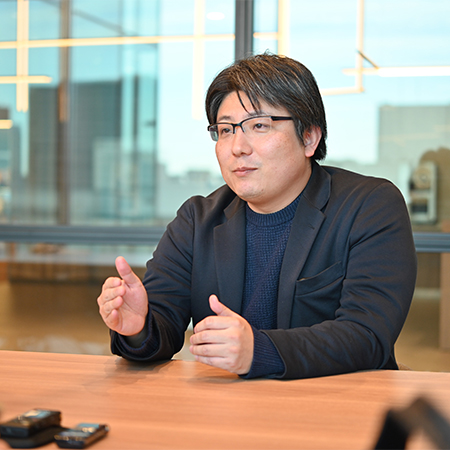
Changes in the research budget environment
When it comes to academia and private companies, they are sometimes said to be like oil and water, but that is not the impression I have. That may be because I was originally in the engineering department, and I have continued to work on research themes based on real-world problems and was used to communicating with people working in the field at various private companies through collaborative research and other initiatives.
I am also able to remain active at conferences. While it feels as if requests for peer reviews and editing have slightly decreased, I have been able to achieve results such as winning the Best Paper Award at the International Conference on Information Visualization (IV) in 2024 and 2025.
One major change that I noticed after leaving the university was that I no longer needed to secure Grants-in-Aid for Scientific Research (KAKENHI) and other research expenses. University faculty members will understand that being freed from this application work was an extremely significant change. At the same time, it is also true that securing research expenses created a positive form of pressure to continue thinking about research themes. Therefore, since joining the company, I have been constantly aware of the need to keep thinking about research themes while being stimulated by proactive discussions with people from the business units and others from outside the laboratory.
One other difference from academia would be how companies handle intellectual property. While universities do not have a particularly high awareness or priorities regarding the acquisition of intellectual property, companies will basically file for a patent first when they come up with any good research ideas. I was initially confused by this process of writing a research paper only after filing the patent application. Incidentally, acquiring a patent does provide some incentives. Since patents also function as a portfolio that showcases one’s research activities, they should prove to be meaningful as a researcher.
An environment with potential where “anything is possible”
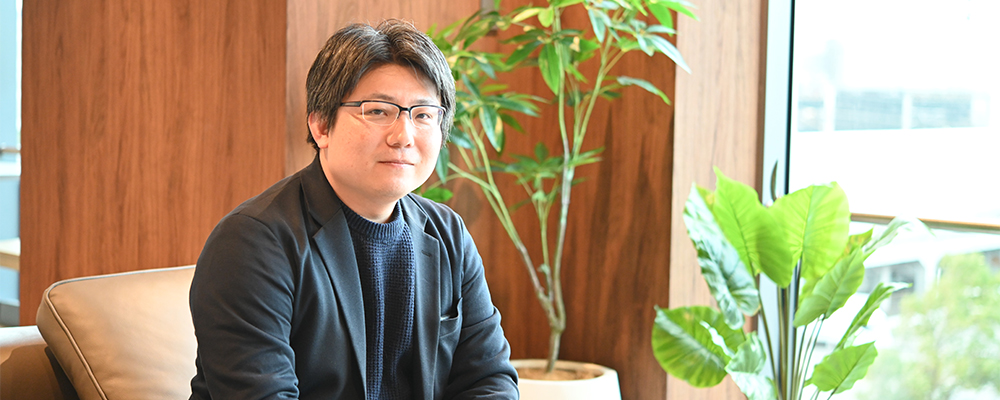
NEC’s laboratories are situated right in between academia and business, and I believe that makes it the perfect workplace for researchers who are interested in such an environment. In fact, I have already introduced our employee referral program (Note) to two of my acquaintances working in academia. The work-life balance is also good, which enables employees to make a clear separation between work and their personal life.
However, one question that troubles me is when people ask, “What does NEC do?” Since NEC is involved in diverse activities across a wide range of business areas from undersea cables to space projects, it is difficult to give a succinct answer.
In other words, this may conversely mean that “anything is possible” at NEC. Actually, NEC boasts numerous specialists across various business areas and team members with diverse technical expertise and skill sets. In addition, I personally feel that NEC has vast hidden resources with great potential. Therefore, I believe that if I can engage with a wide range of people and effectively connect with them, there is the potential to create even greater forms of social value. I hope to tackle such challenges in the future.
- Note:A program that allows candidates to apply for career positions through a referral from an NEC employee.
- *The information posted on this website is the information at the time of publication.