Global Site
Breadcrumb navigation
Charting the course for the future of GX through NEC’s thought leadership initiatives
March 18, 2026

Climate change, food insecurity, and other issues facing modern society cannot be resolved by one company or technology. This explains growing calls for more than just temporary solutions, but rather approaches and perspectives that resonate with society. Through its thought leadership initiatives, NEC begins with social challenges and leverages the power of technology to shape the future of our society together with diverse stakeholders.
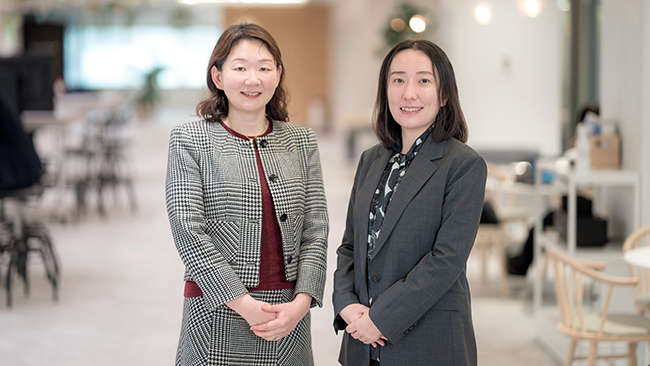
Green Transformation (GX) is an initiative spearheaded by Japan with the objective of achieving both environmental conservation and economic growth. This initiative is particularly important as there is rising demand for a shift to clean energy and a transformation of the entire economic and social system. In this recent interview, Miki Sato of NEC’s GX Business Development Division and Kanako Sakimura of the Thought Leadership Division at the Institute for International Socio-Economic Studies (IISE; the NEC Group’s independent think tank) sat down to discuss GX and thought leadership initiatives.
Leveraging digital technology to promote environmental conservation and economic growth
——How are NEC’s GX efforts and thought leadership initiatives connected?
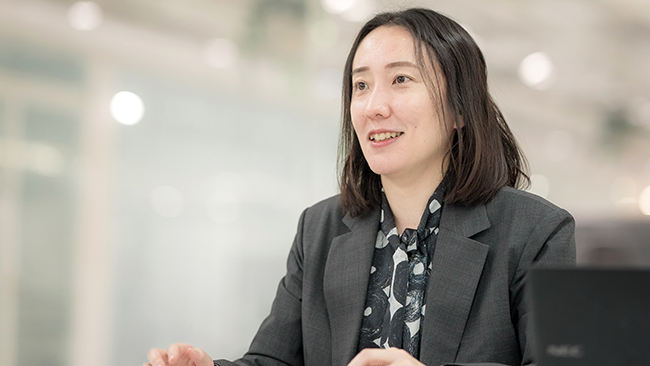
Sato: We are utilizing digital technology to support initiatives targeted at achieving both environmental conservation and economic growth. Our goal is to ensure that GX evolves from a mere concept into a practical solution that takes root in society and effectively drives the economy. That is NEC’s role as a social value innovator. In addition to working on proposals and business development efforts to make this possible, the GX Business Development Division is partnering with IISE to develop a medium- to long-term vision and to engage in leadership activities that will guarantee GX becomes deeply ingrained in society while also building new markets and establishing rules.
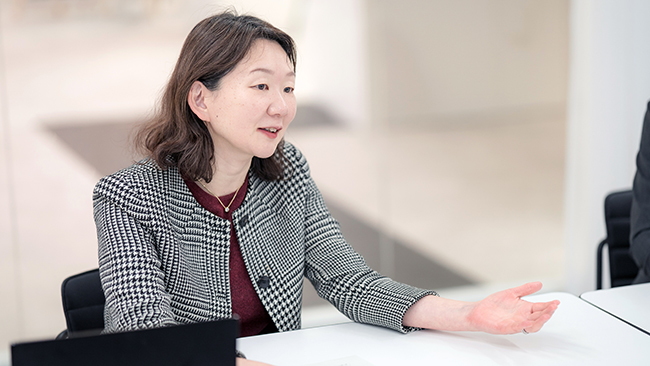
Sakimura: Thought leadership initiatives are social implementation initiatives designed to present innovative approaches (i.e., thought) to tackling social challenges and create new value through shared awareness and co-creation with stakeholders. At IISE, we are at the forefront of the NEC Group’s thought leadership initiatives, aiming to establish ourselves as a platform-based think tank that integrates expert insights and drives initiatives from conceptualization to social implementation.
——Could you please share some specific examples of these activities?
One example is our approach to climate change. Broadly speaking, climate change measures can be divided into two categories: mitigation measures targeting the root causes, such as reducing CO₂ emissions, and adaptation measures intended to minimize damage from climate events like floods and droughts. It has been pointed out that adaptation measures, compared to mitigation measures, have less visible impact and value. This is why we have defined the difference between implementing adaptation measures and not implementing them as “adaptation value.” By leveraging digital technology to effectively visualize value, we aim to attract investment in the field of adaptation.
In 2024, NEC established the Japan Consortium for Adaptation Finance together with Mitsui Sumitomo Insurance Co., Ltd. This consortium, which holds monthly review meetings, currently comprises seven companies, including construction and infrastructure-related entities and financial institutions.
Adaptation measures (e.g., green infrastructure) that harness the power of nature, such as rain gardens and wetland management that promote the infiltration and retention of water, are another important theme. By visualizing not only disaster prevention but also biodiversity preservation, well-being enhancement, and other forms of value, we aim to develop systems that encourage private-sector-led investment of funds and human resources.
Ending the notion that “sustainability doesn’t yield profits”
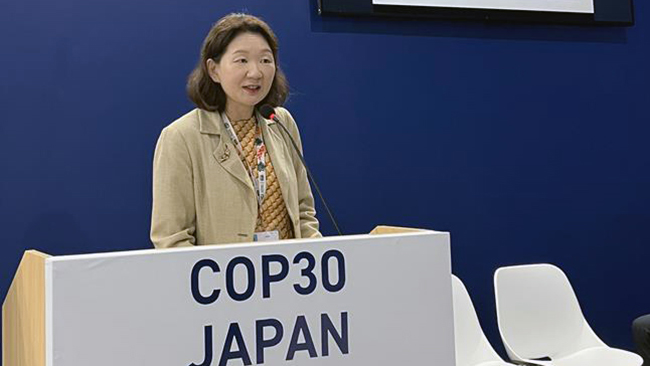
——Ms. Sato, in November 2025, you spoke at the 30th Conference of the Parties to the United Nations Framework Convention on Climate Change (COP30) in Brazil. Could you please share your experience there with us?
Sato: COP30 marked the third time NEC has participated in the annual Conference of the Parties to the United Nations Framework Convention on Climate Change (COP). One of our goals of participating in this conference is to share our vision for addressing climate change and GX with the international community while promoting our thought leadership activities. Additionally, we aim to identify business co-creation partners who are committed to advancing social implementation.
At the venue, I made a point of asking top-level officials from international organizations and GX experts straightforward questions such as: “Would you endorse the thought proposed by NEC?” and “Would you be willing to pay to make it a reality?” Conversations like these often reveal that demand related to the theme we are discussing is greater than we initially anticipated. This is why we are constantly refining the roadmap to achieve our goals while carefully integrating feedback from those directly involved.
Building on the feedback we received at COP last year, I presented a demonstration of a field trial conducted in Indonesia, which visualized the effectiveness of flood risk mitigation measures in urban areas, at COP30. In addition, I presented the results of AI-driven simulations examining resilience following the introduction of comprehensive climate change measures for agriculture in Africa, and specifically outlined future risks and potential solutions.
Overall, significant progress was made at COP30 in developing universal evaluations and evaluation criteria for the adaptation field. I have become keenly aware that the expertise and technologies NEC has cultivated over the past 40 years in Japan for disaster prevention and mitigation are now sought worldwide, transcending national and regional borders, spurred by rising concern about climate change.
——You are truly taking full advantage of the NEC Group’s strengths.
Sato: While people often say that environmental and sustainability initiatives don’t yield profits, I view it as our job to achieve true sustainability by redesigning them into profitable businesses. Going forward, we also plan to launch new business ventures in domains such as the supply chain, which aligns with NEC’s current lines of business.
GX is a theme that will remain relevant until at least 2050, the target set by the Japanese government to achieve carbon neutrality. Since we are in this for the long haul, it will be vital to assess when the market will start to pick up and whether there is potential for growth. Although our business divisions tend to focus on addressing short-term customer needs and value propositions, by conducting thought leadership initiatives together with IISE, we are able to maintain a broader perspective and stay attuned to global trends. In our long-term efforts to promote GX, IISE will act as a guiding compass, ensuring that NEC stays on the right path.
Sakimura: IISE’s strength also lies in its connections with external professionals from a wide range of backgrounds. At the recently held IISE FORUM 2026, we welcomed experts from around the globe, including Martin Casado of Andreessen Horowitz, one of the largest venture capital firms in the United States, and Professor Kazuto Ataka of Keio University in Japan. I also had the opportunity to serve as moderator for the session focused on the environment.

Combining the NEC Group’s technology with our vast network of expertise positions us to create unique value only NEC can deliver. By thoughtfully engaging in repeated dialogue with various stakeholders, we aim to identify outcomes that are satisfactory to all. Although this process may take time, it is the only way we can get to the essence of “thought.” Moreover, I believe it will pave the way for creating businesses with greater social value.