
Global Site
Breadcrumb navigation

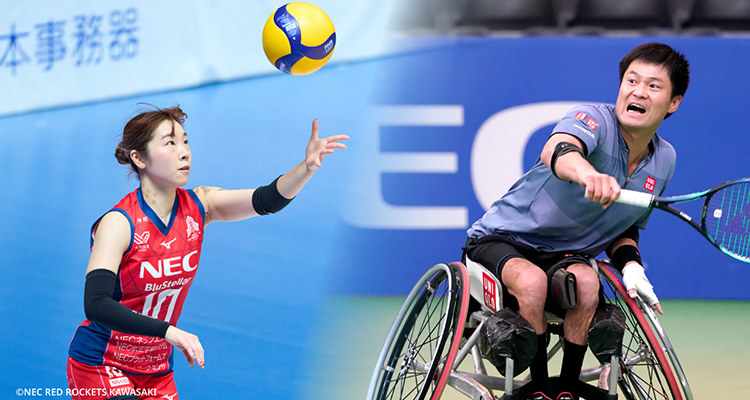
The challenges continue even after your dreams come true
No Borders for Dreams Vol.8
The struggles and convictions of top athletes who stay the course
The journeys of top athletes who have overcome countless challenges to achieve their dreams and compete on the world stage surely inspire many. However, the challenges continue even after these athletes fulfill their dreams. This is not only true for wheelchair tennis but for other sports as well. For Volume 8 of this series, we interviewed Tsukasa Nakagawa, a professional women's volleyball player and newly appointed captain of NEC Red Rockets Kawasaki (Red Rockets) for the 2026–2027 season. The words of Nakagawa and wheelchair tennis legend Shingo Kunieda—two athletes from different sports who have forged different career paths—provide a glimpse of how athletes continue to face new challenges even after they have achieved their dreams.

In pursuit of realizing a society where everyone can dream and take on challenges, NEC has been supporting wheelchair tennis for over 30 years.
In the “No Borders for Dreams” series, together with Shingo Kunieda, we explore the appeal of wheelchair tennis and the people who dedicate themselves to challenging the limits.
Through these stories of taking on challenges, we hope to inspire everyone to pursue their own dreams.
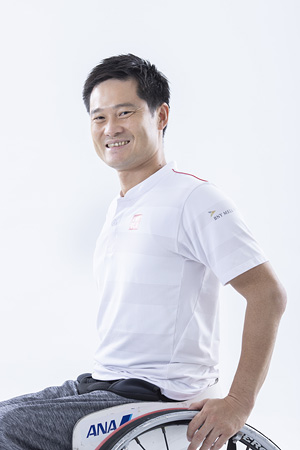
Shingo Kunieda
Born in Kashiwa, Chiba Prefecture, Japan, in 1984.
Kunieda discovered wheelchair tennis at the age of 11 and won a doubles gold medal at his first Paralympic Games in Athens in 2004. He went on to win singles gold medals at the Beijing, London, and Tokyo Paralympic Games.
Kunieda discovered wheelchair tennis at the age of 11 and won a doubles gold medal at his first Paralympic Games in Athens in 2004. He went on to win singles gold medals at the Beijing, London, and Tokyo Paralympic Games.
Reaching the stage you have always dreamed of and then facing the struggles that lie beyond it
While wheelchair tennis players compete in singles or doubles events, volleyball is a team sport. And even though the rules and styles of play are completely different, they have one thing in common: the athletes who play these sports are in it to win it. What similarities do athletes leading the pack in their pursuit of climbing to the top share?
©NEC RED ROCKETS KAWASAKI
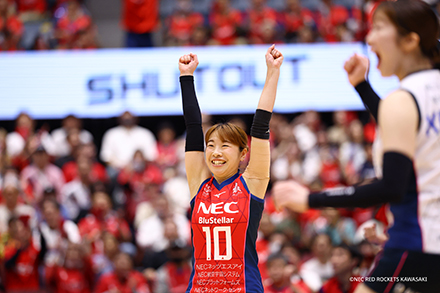
Tsukasa Nakagawa had dreamed of playing for the Japanese national volleyball team since childhood. She achieved that dream in 2023, just after graduating from university. Looking back on how she basked in the joy of stepping onto the stage she had long dreamed of, she also remembers feeling overwhelmed by the intense level of global competition.
"I was over the moon when I was selected to play for the Japanese national team for the first time, but once I stepped onto the court, I also felt nervous because the level of competition was far higher than I had imagined. Still, that is exactly why I now feel driven to be selected again and to stand on that court once more."
Nakagawa later went on to be chosen again as a member of the Japanese national team, which came in fourth place at the 2025 FIVB Women's Volleyball World Championship. In addition, the Red Rockets—the team to which she currently belongs—finished in third place in the SV.LEAGUE and came in second place at the Empress' Cup All Japan Championship during the 2025–2026 season. While it would seem that both Nakagawa and the Red Rockets have made steady progress, Nakagawa has mixed feelings in this regard. Reflecting on last season, she says, "Despite knowing there were issues we needed to focus on, we were unable to fully address them."
"The Red Rockets should have finished higher in the rankings, but we couldn't pull it off at the very end. To be honest, at times during the season, I sensed weaknesses in our team's synergy and felt there were areas we should have focused more of our attention. I ended up letting things like this slide because we were winning consistently, but I can't help but wonder if we could have done better if we had faced our issues head-on at the time. This season, whether we win or lose, I would like to maintain consistent communication with fellow team members and improve our performance as a team," says Nakagawa.
Overcoming the obstacle of not knowing what lies ahead
The 2026–2027 season is already underway, and the Red Rockets have hit the ground running. Yet, Nakagawa feels unsure of which path to take going forward.
"I'm not sure how to return to the world stage or how to further increase my value as a member of the Red Rockets. Also, I have always felt I could see what awaited me, but the future now seems unclear," admits Nakagawa.
Nakagawa, who achieved her childhood dream of playing for the Japanese national team and is now flourishing as captain of the Red Rockets, also seems to be dealing with inner struggles. Shingo Kunieda, who held the top spot in the world wheelchair tennis rankings for many years can empathize with Nakagawa's feelings.
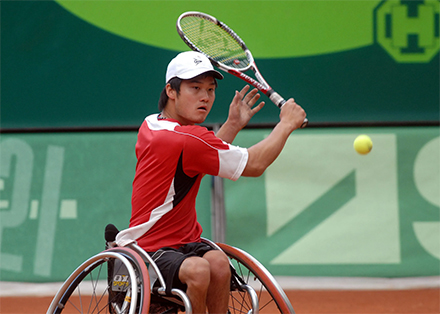
(photo taken at the 2007 Czech Open)
"I also lost sight of my goals soon after becoming ranked No.1 in the world for the first time. Up to that point, I had focused on perfecting my practice regimen and tactics to beat the world's top player, but once I claimed that No.1 spot, I realized I no longer had a goal to work toward."
According to Kunieda, who lost sight of his goal after catching up to the competitor he had pursued but still managed to maintain his No.1 ranking for many years, "I was able to stay at the top by shifting my focus from goals directed toward others to facing myself."
"The tournaments don't just stop when you reach the top," added Kunieda. "As you play in more matches, you begin to see the areas where you need to improve. And even if you no longer have a role model, you won't lose sight of your goals as long as you can pinpoint what you need to work on within yourself."
Although wheelchair tennis and volleyball are very different sports and Nakagawa and Kunieda have taken different paths in life, they faced similar struggles after achieving their dreams. If you think about it, perhaps the time spent chasing one's dreams and seeking the next goal is a necessary process for everyone, not just athletes.
No matter how lost you feel, never let go of your convictions
Despite feeling lost, there is one thing Nakagawa says she simply cannot let go of: "No matter how much I agonize over things like this, once I commit to giving it my all, I see it through to the end. That conviction is the one thing I absolutely never want to lose."
Now, as she leads the Red Rockets as team captain, Nakagawa wants to prioritize understanding each player more than ever before. Nakagawa also says she is trying to spend more time connecting with the team while also maintaining communication with the vice-captain and other members.
"As a team, the Red Rockets are playing to win. However, even when the team strives to attain the same goal, each player has their own aspirations. For some, that aspiration may be to step onto the court wearing the team's uniform. For others, it may be to perform better than they did last year or to become a world-class athlete. Also, even if the coach tells everyone the same thing, each player will interpret it differently. Since teamwork is crucial in volleyball, I want to fully understand the aspirations and values of each player to make our team better."
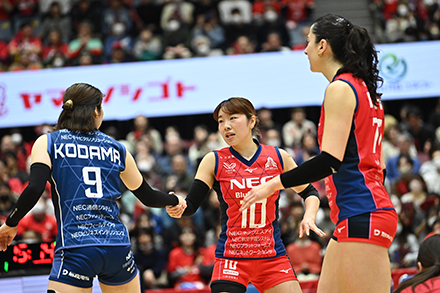
©NEC RED ROCKETS KAWASAKI
Staying true to your convictions to overcome obstacles and move on to the next stage
Nakagawa says her current dream is to play in the Los Angeles 2028 Olympic Games (LA28). Having already fulfilled her childhood dream of playing on the Japanese national team, she continues working steadily and diligently toward her next dream.
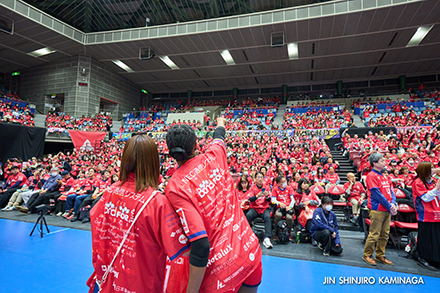
"As I think about how I can prepare myself for LA28, I am setting step-by-step goals and doing everything I can to achieve them. One of those goals is to be the setter for the team that wins the SV.LEAGUE championship. I believe that aspiring to win as a team will also help me fulfill my dream of participating in the next Olympics, so I would like to focus on delivering better results this season than last as both an individual and as a team," says Nakagawa.
What keeps athletes going as they forge ahead to overtake the competition and overcome obstacles, even when they feel lost or find themselves struggling, is the outpouring of support they receive.
"My family is always cheering me on, and there are also those who send me words of encouragement after seeing my efforts in the media. Then there are the fans who support our entire team. This support motivates me to give it my all for those who are rooting for me," says Nakagawa.
Kunieda, who also battled through countless matches during his career, offered a passionate message of support to the Red Rockets, saying, "The voices of fellow players sitting courtside and the cheers of spectators are most certainly heard by the athletes. For me, the desire to play for everyone—from those who came to watch me in person to those who cheered me on from in front of their televisions—served as a source of strength for me in many matches. Encouragement from others is what brings out the best in athletes. Please know that I am also cheering for the Red Rockets!"
Once you achieve your dream, new hurdles await. And this is by no means something that applies only to top athletes. Everyone chases after their own dreams, works hard to make them come true, and keeps moving forward even if they struggle along the way. There may be times when you cannot keep up emotionally, or when the future feels uncertain. Nevertheless, if you press on, the next goal should come into sight. We hope that learning about the struggles and challenges Nakagawa and Kunieda faced will give everyone the courage to push forward when they are struggling.
- *This interview with Tsukasa Nakagawa was conducted on September 4, 2026.

What did you think of this article?
To help us plan future "No Borders for Dreams" initiatives and our wheelchair tennis sponsorship activities, please take about a minute to fill out this survey.
 Take the survey (about 1 minute)