
Global Site
Breadcrumb navigation


Looking ahead to a new generation of wheelchair tennis legends
No Borders for Dreams Vol.7
The success of junior athletes who are growing with every challenge they encounter

In pursuit of realizing a society where everyone can dream and take on challenges, NEC has been supporting wheelchair tennis for over 30 years.
In the “No Borders for Dreams” series, together with Shingo Kunieda, we explore the appeal of wheelchair tennis and the people who dedicate themselves to challenging the limits.
Through these stories of taking on challenges, we hope to inspire everyone to pursue their own dreams.
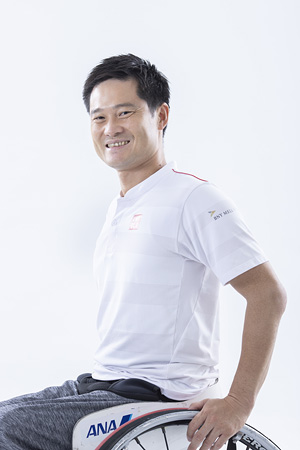
Shingo Kunieda
Born in Kashiwa, Chiba Prefecture, Japan, in 1984.
Kunieda discovered wheelchair tennis at the age of 11 and won a doubles gold medal at his first Paralympic Games in Athens in 2004. He went on to win singles gold medals at the Beijing, London, and Tokyo Paralympic Games.
Kunieda discovered wheelchair tennis at the age of 11 and won a doubles gold medal at his first Paralympic Games in Athens in 2004. He went on to win singles gold medals at the Beijing, London, and Tokyo Paralympic Games.
Japanese athletes who have already made a name for themselves on the global stage are now encouraging junior players as they diligently train, striving to one day reach the top of the wheelchair tennis world themselves. Among them is the legendary Shingo Kunieda, who achieved a career total of 50 wins across all four Grand Slam tournaments (Australian Open, French Open, Wimbledon, and U.S. Open) and brought home four Paralympic gold medals. Now, Kunieda is inspiring the next generation of wheelchair tennis athletes to reach for the stars.
In this edition of No Borders for Dreams, we feature two junior athletes giving it their all as they aim to become top players like Kunieda. What are their aspirations, and what changes have made it possible to pursue them?
How the fact that the world's greatest wheelchair tennis player calls Japan home is inspiring the next generation
NEC has helped foster the growth of junior wheelchair tennis players since it began supporting the sport in 1992, and it is striking how much the top players competing at the world level have influenced these young athletes.
In addition to attracting worldwide attention, Kunieda's success has had a tremendous impact on junior wheelchair tennis players. The countless achievements that have earned Japan the reputation of being a wheelchair tennis powerhouse have not only motivated the next generation to chase their dreams but also improved training environments and coaching quality.
Kunieda had this to say about the junior wheelchair tennis landscape in recent years:
"I believe that being in an environment where the world's top male and female athletes in the sport are present can have a very positive impact on junior players. It allows them to view success not just as a distant dream but as an attainable goal. These young players have opportunities to watch world-class players practice, speak with them, and learn from the experiences shared by the coaches and trainers around them. This allows young players to do more than merely learn skills. They also gain insight into how these players approach training and prepare for matches, as well as how they think and live their lives, enabling them to discover the guiding principles that shape their everyday lives. Ultimately, this has a cascade effect that raises the level of wheelchair tennis in Japan."
With Japan hosting international junior tournaments, young players now have even more chances to demonstrate the skills they have cultivated through daily practice.
This time, we shine the spotlight on two players who participated in the TOKYO JUNIOR OPEN 2026 held in July 2026: 16-year-old Seira Matsuoka, the girls' singles winner, and 14-year-old Hirofumi Inoue, the runner-up to the boys' singles winner.
What kind of impact has the success of predecessors like Kunieda and the resulting improvements to the training environment had on these two up-and-coming players?

Following in the path of their predecessors as they strive to become No.1 in the world
Seira Matsuoka faced Japan's Nozomi Iwamoto in the girls' singles final, clinching the title in an impressive win. Matsuoka, who began using a wheelchair at age five, started playing wheelchair tennis when she was six years old. At the Cruyff Foundation Junior Masters held in France in 2025, Matsuoka became the youngest player in tournament history to claim the title. Currently ranked No. 2 in the Junior Wheelchair Tennis World Rankings, she is already drawing global attention and is well on her way to making a name for herself.

Matsuoka says she finds motivation in competing against stronger opponents. "Ever since I started playing wheelchair tennis as a little girl, I have told myself that if I was going to do this, I needed to aim for the top." For Matsuoka, competing in international tournaments also seems to awaken the competitor within her.
"There are powerful players in Japan and around the world. When I go up against high-level athletes, I inevitably lose at first. However, that motivates me to score even higher next time and win. Recently, players younger than me are becoming increasingly stronger, which makes me all the more determined to defeat them."

Matsuoka says her dream is not only to win the singles title at the US Open Junior Wheelchair Championships but also to become the world's number one player.
"At the US Open Junior Wheelchair Championships in 2025, I won the girls' junior doubles title, but only made the best four in the girls' junior singles at the tournament, so that's where I would like to focus my attention first. I also have my heart set on winning a gold medal at the Paralympics as early in my career as possible. My goal is to become a player who consistently stays at the top like Shingo Kunieda or Yui Kamiji, who is also a female player like myself."
Determined to become stronger, Matsuoka works diligently. Even when she flashed her bright smile, you could sense her fierce determination.
Fueled by persistence and dreaming bigger than anyone who has come before him
Then there is Hirofumi Inoue, who went head-to-head against Australia's Arlo Shawcross in the finals at the TOKYO JUNIOR OPEN 2026. Although Inoue finished as the runner-up in the final, he can reflect on the experience and recognize that he learned a lot from it.

"Even though I was dissatisfied with the outcome, I feel I overcame my challenges in the final. I received helpful guidance at the training camp I attended before the tournament, and my biggest breakthrough was changing my approach to serving," says Inoue.
Inoue began playing tennis at the age of three and dreamed of becoming a professional player. However, he had to give up the sport in sixth grade due to illness. Not wanting to give up on his dream, he later switched to wheelchair tennis. Now ranked No. 5 in the Junior Wheelchair Tennis World Rankings, he has achieved remarkable growth in the less than two years since making the switch. Inoue will be the first to say that his seemingly steady rise to success has not been without its hardships.
"At first, I had a hard time getting used to the movements involved in playing while steering my wheelchair, which made it both physically and mentally difficult. I also started to worry that it would take a really long time to make my way to the top. When I tried the competitive wheelchair passed on to me by Ryota Kawada, one of my mentors, I discovered how incredibly easy it was to maneuver. From that point forward, I gradually improved my wheelchair maneuvering skills, leading me to where I am today."
Inoue, who describes playing wheelchair tennis as fun, currently has his sights set on winning at the Paralympics, going so far as to declare, "My goal is to surpass Tokito Oda, who became the youngest wheelchair tennis singles champion in history to win a gold medal at the Paris 2024 Paralympic Games at the age of 18, and rewrite history!"

"Back when I had just switched to wheelchair tennis, I watched a video of one of Oda's matches. At first, I was inspired by how skillfully he played. However, being inspired by someone isn't enough if you want to surpass them someday. I realized that if I was going to aspire to be the world's No.1 wheelchair tennis player, I would have to outperform Oda."
Inoue is transforming his inspiration into goals and working tirelessly to achieve them as quickly as possible. He has also shared his ambition to eventually break Kunieda's records, raising our expectations for his continued development as a player.
The driving force behind Kunieda's determination to maintain his winning streak

As you can see, these two junior athletes are laser-focused on becoming the top wheelchair tennis players in the world. Shingo Kunieda, whose path they hope to follow in, says there is one thing he remained mindful of when turning pro.
"After going pro in 2009, I knew I wanted to change the landscape of wheelchair tennis to make young athletes more interested in playing the sport. I also realized that if I couldn't prove that becoming the top player in the world would allow me to earn a living as a professional, it might discourage future players from choosing the path I had taken. That's why my top priority was to keep my winning streak going. Doing so would create more opportunities for media coverage, helping to boost awareness of wheelchair tennis as a sport. This would then increase the number of players and spectators, ultimately translating to greater support for tournaments and individual players. This created a desire in me to play well beyond people's expectations, ensuring that spectators would continue coming back to watch."
Listening to Matsuoka and Inoue, it is evident that Kunieda's determination has been passed down to the next generation.
Dreams are sparked by inspiration, and junior athletes who embrace the dream of competing on the world stage will continue to emerge. In this way, new legends will be born, and countless people will derive courage from witnessing their achievements. To carry this challenge forward, NEC will continue its journey alongside wheelchair tennis.
- *This interview with Seira Matsuoka and Hirofumi Inoue was conducted on July 26, 2026 (following the TOKYO JUNIOR OPEN 2026 finals).

What did you think of this article?
To help us plan future "No Borders for Dreams" initiatives and our wheelchair tennis sponsorship activities, please take about a minute to fill out this survey.
 Take the survey (about 1 minute)