Global Site
Breadcrumb navigation
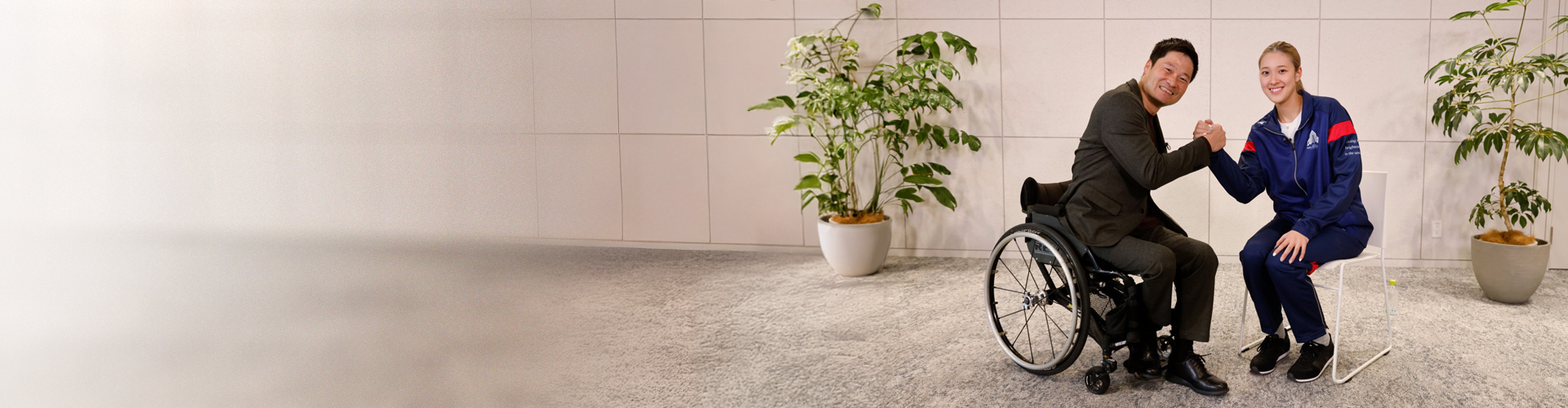
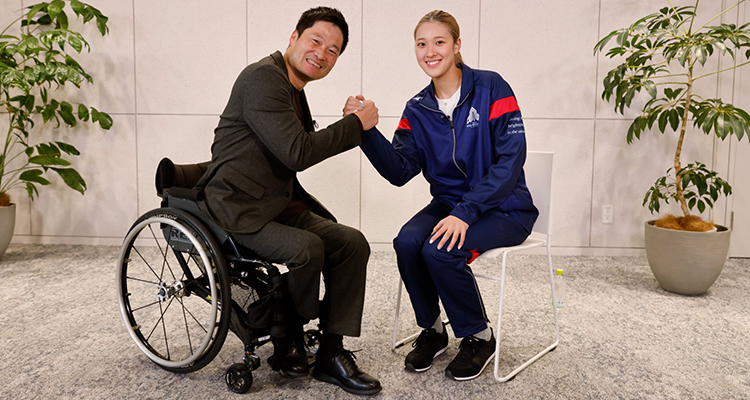
The Ultimate Dialogue between Shingo Kunieda and Yoshino Sato
No Borders for Dreams Vol.4
Two Top Athletes Share Their Tips for Tackling Challenges

In pursuit of realizing a society where everyone can dream and take on challenges, NEC has been supporting wheelchair tennis for over 30 years.
In the “No Borders for Dreams” series, together with Shingo Kunieda, we explore the appeal of wheelchair tennis and the people who dedicate themselves to challenging the limits.
Through these stories of taking on challenges, we hope to inspire everyone to pursue their own dreams.
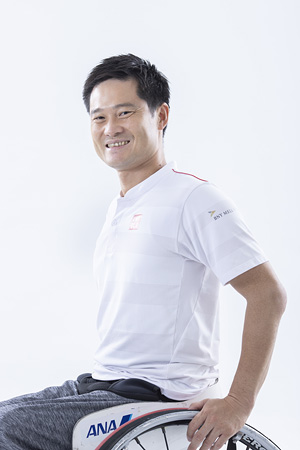
Shingo Kunieda
Born in Kashiwa, Chiba Prefecture, Japan, in 1984.
Kunieda discovered wheelchair tennis at the age of 11 and won a doubles gold medal at his first Paralympic Games in Athens in 2004. He went on to win singles gold medals at the Beijing, London, and Tokyo Paralympic Games.
Kunieda discovered wheelchair tennis at the age of 11 and won a doubles gold medal at his first Paralympic Games in Athens in 2004. He went on to win singles gold medals at the Beijing, London, and Tokyo Paralympic Games.
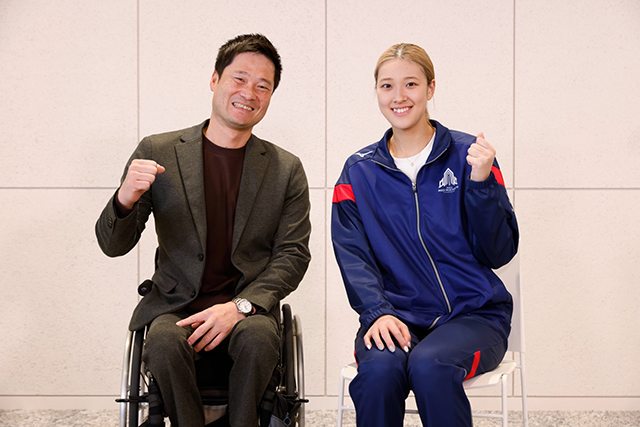
In Volume 4 of the No Borders for Dreams series, we are pleased to present an overview of a special event hosted by NEC. This event featured an engaging dialogue between two remarkable athletes, wheelchair tennis legend Shingo Kunieda and volleyball star Yoshino Sato of NEC Red Rockets Kawasaki.
In their dialogue, Kunieda and Sato discussed the challenges they have risen to in their careers and how athletes rely on and support one another. Before reading the article, please watch the video below, which offers valuable tips for both daily life and the workplace.
[Movie] NEC Ultimate Dialogue - World Champion & World Challenger (24:06)
This article covers some of the key takeaways from the dialogue itself, as well as additional remarks made by these top athletes after the event.
Growing interest in a dialogue about “challenges”
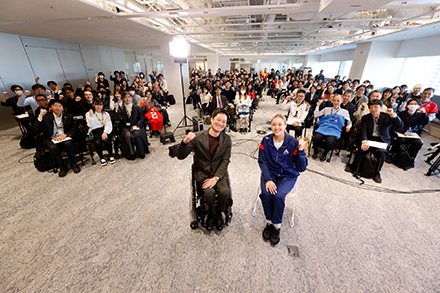
In December 2025, employees and their families gathered near Tokyo at the NEC Tamagawa Plant, eagerly awaiting the arrival of Shingo Kunieda and Yoshino Sato at an event planned to coincide with NEC Happy Holidays, an annual campaign through which the NEC Group expresses its appreciation to employees and their families.
Participants were encouraged to submit their questions in advance, and many of these questions focused on the themes of “challenges” and “pressure.” This not only demonstrated that NEC employees are eager to take on challenges but also indicated a high level of interest and anticipation surrounding the event.
A recap of this special dialogue: Kunieda and Sato on the challenges they have risen to in their careers and how athletes rely on and support one another
This conversation went beyond the context of sports to explore the mindset and approach needed to persistently pursue challenges.
―Challenges
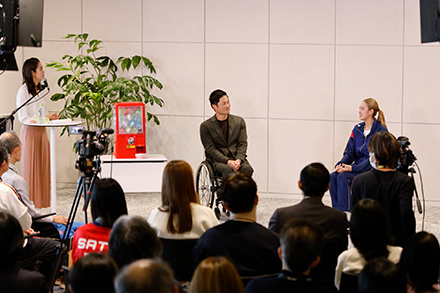
Shingo Kunieda: The word “challenge” has played an incredibly significant role in my life. In times when I was ranked second or third, I challenged myself to unseat the top-ranked player, and once I succeeded in claiming the No.1 spot, I had no choice but to continue evolving. When you are winning, there are times when you start to lose sight of the reasons behind your losses. That’s why I have focused on constantly evolving by questioning and analyzing myself since retiring from the court.
Yoshino Sato: Since I’m still actively competing, I am constantly pushing myself to grow. You can learn many lessons from losses, but I also make a point to look for what went wrong in the matches that we win. Rather than being content with winning, I want to continue rising to new challenges.
―Finding the determination to compete on the world stage
Shingo Kunieda: When I first left Japan during my first year of high school, the world’s top players were already making a living with nothing more than a racket. I was blown away when I realized that wheelchair tennis was being played at a completely different level from that in Japan, and this fueled my first dream of facing off against these powerful players. While that dream came true three years later, it was a crushing defeat in which I lost 6-0, 6-0. That is when I truly began my challenge of taking on the world.
Yoshino Sato: In my third year of university, I joined the Japanese national team. Facing unimaginably high blocks on the world stage, I got discouraged because it was also a time when my spikes just weren’t landing.
―Setting goals to play on the world stage and striving to grow
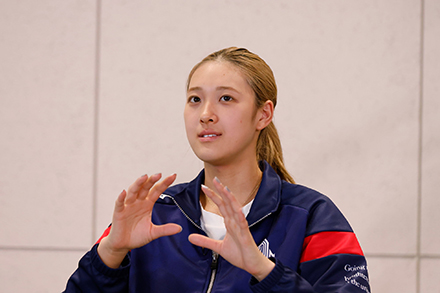
Yoshino Sato: At first, my goal was simply to keep getting out there on the court and playing in matches. However, once I started playing for the national team, I set a new goal of winning a medal. Whenever I have a goal, I feel myself growing. When medals are on the line, the competition really steps up their game. I’d like to ask Mr. Kunieda what he focuses on doing to win in such situations.
Shingo Kunieda: My ultimate goal was to win at the Paralympic Games. To shift gears and play even better than I usually do, I worked with a mental trainer to come up with three positive self-talk phrases.
“I know what to do.”
“I can do it.”
“Let’s go!”
I would recite these phrases at every point, pushing myself forward.
―Life-changing turning points
Shingo Kunieda: Every Paralympic Games has been a turning point for me. My way of life changed every time I won but also each time I suffered a setback.
Yoshino Sato: I have experienced three turning points in my life. First at university, I learned the joy of winning. Then, when I played my first match for the Japanese national team, I realized I wasn’t good enough. The third turning point was when I had the opportunity to see the world’s top player in action during my first year at NEC.
―The point of having dreams and the value of continuing to embrace challenges
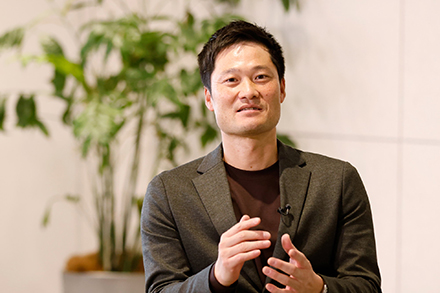
Shingo Kunieda: Since retiring, I have come to recognize the importance of having a goal. Chasing after something is the most enjoyable part of life. I have also taken on the challenge of learning English and even started coaching players on the U.S. national team.
You only live once, so I am determined to take on as many challenges as I can.
Yoshino Sato: I value my short-term goals. I’ve also started taking on various challenges outside sports. Dreams and goals are things that bring me joy.
Teams are built by the challenges taken on by individuals
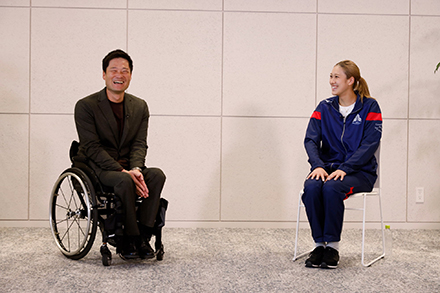
It’s not just resolve or strength that matters when it comes to the pursuit of challenges. During a question-and-answer session held after the conversation between Kunieda and Sato came to an end, they also spoke about team dynamics.
According to Sato, “Team dynamics directly impact performance on the court.” She then touched on the importance of how and when to communicate with teammates. Meanwhile, Kunieda emphasized the need for communication that transcends roles, explaining, “Even if you’re the one in a position of authority, you won’t grow unless you have a coach telling you that you’re not doing things right.” In addition to demonstrating the importance of forging ahead despite having doubts, Sato and Kunieda talked about the vital role that supportive environments, family, and teammates play in that journey.
Teams grow stronger as their members continue to take on new challenges. Building on that foundation requires a team dynamic where members feel free to voice their opinions with one another. This perspective can also be applied to a variety of lifestyles and business environments.
Kunieda shared his thoughts on embracing challenges with the audience, saying, “Taking on challenges isn’t difficult. All you have to do is decide, ‘I’m going to do this today,’ and then take it one step at a time. What’s important is consistency, even if that means you can only spare five minutes on your busiest days.”
These words from two top athletes are sure to inspire readers to take that first step towards a new challenge, whether it be in their professional or everyday lives.