
Global Site
Breadcrumb navigation

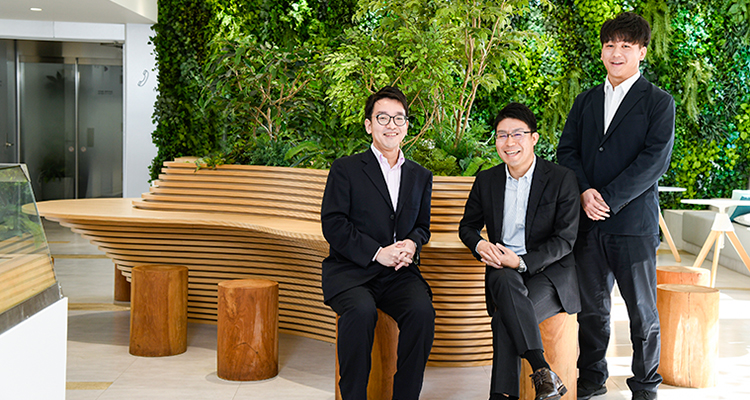
The professionals providing comprehensive support for rocket launches: Behind the scenes of delivering satellites into orbit
To deliver satellites into space, it is essential to successfully carry out the critical mission of launching a rocket . NEC's Launch Site & Launch Pad Group, part of the Space & Intelligence Systems Division, is responsible for supporting these launches on-site at locations such as the Tanegashima Space Center and the Uchinoura Space Center. We had an interview with members of this group about the technologies, equipment, systems, and operating structures required for the launch and control of rockets.
Keeping a watchful eye on the flight and completion of a rocket mission from the ground
──To begin, could you please explain the role of the Launch Site & Launch Pad Group?
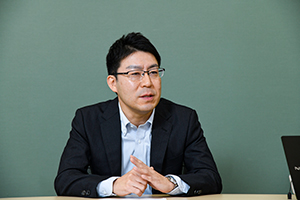
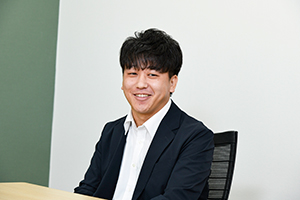
Manager, 4th Space Systems Group
Space & Intelligence Systems Department
Aerospace Business Division, NEC
Inoue: The Launch Site & Launch Pad Group is responsible for everything related to rocket launches, from the design and manufacture of ground facilities to their maintenance and operation. These facilities are broadly divided into "launch pad facilities" used during the pre-launch phase, and "launch site facilities" used to track the rocket after liftoff. Our group supports both of these crucial areas.
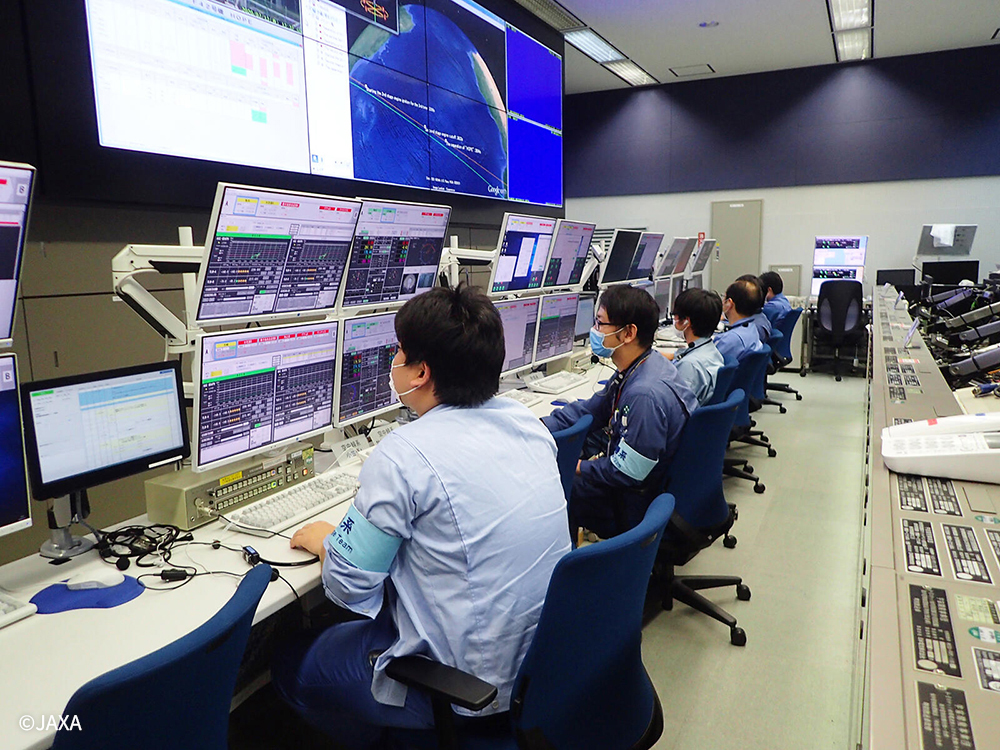
To check the status of a satellite or rocket before launch, a communication link must be established between them and the ground-based test equipment. We set up both wired and wireless communication links, which are examples of launch pad equipment. Rocket tracking stations serve as an example of launch site facilities. Rocket mission control receives signals transmitted from the rocket after liftoff and monitors them to confirm that the vehicle is following its planned flight trajectory.
As the rocket ascends, its stages separate one by one until the satellite is finally deployed into orbit. Even after satellite separation, we must continue monitoring the rocket—which has completed its mission—until we can no longer receive its signal.
Kabatani: In the lead-up to a rocket launch, we travel to the launch site, such as Tanegashima, about one to two weeks before liftoff. There, we conduct repeated simulations and thorough preparations before the actual launch.
—How many people are part of the Launch Site & Launch Pad Group?
Inoue: Our core team consists of eight members. In addition, colleagues from our group companies and partner companies join us, so the total number is quite large.
Each member of NEC brings their own unique expertise to the table. Kabatani and I both originally started our careers in equipment design. In addition, our team is strengthened by specialists in other key areas, including systems design, construction, and communications.
Toyoda: I joined NEC in April 2025 and was assigned to this group. Currently, I'm gaining hands-on experience through on-the-job training with the goal of becoming a systems specialist. Once I've built that expertise, my goal is to first build a foundation in systems, and then, just like Inoue and Kabatani, gain a deep understanding of equipment too.
— Specifically, what kinds of facilities are included in launch pad and launch site infrastructure?
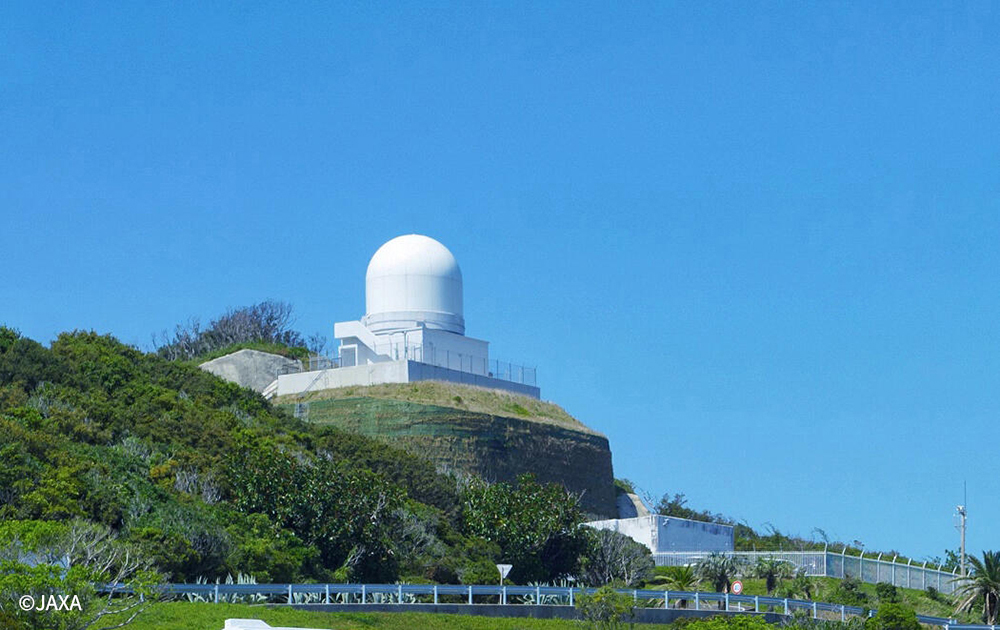
Kabatani: Rocket tracking stations are located all across Japan and overseas. Earlier, Inoue mentioned that receiving signals transmitted from the rocket, those rocket tracking stations are the facilities that perform that role. The signals received at each tracking station are then transmitted to the launch site facilities, including those at Tanegashima, where they are integrated into the centralized mission control system. NEC is currently responsible for the technical maintenance and operational support of rocket tracking stations in locations including Takesaki, Ogasawara, and Guam.
Performing at our best in every situation
—What are some of the most challenging aspects of your mission with launch pad and launch site facilities?

Assistant Manager, 4th Space Systems Group
Space & Intelligence Systems Department
Aerospace Business Division, NEC
Inoue: There are times when a successful rocket launch does not necessarily mean a 100% success from our perspective. Situations like these constantly remind us how challenging they can be to deal with.
For example, there are times when something occurs that differs from what we observed during our pre-launch simulations, even though it has no impact on the launch itself. In such cases, it is our responsibility to thoroughly investigate the cause and provide a clear explanation to ensure that the issue does not affect future launches.
Toyoda: At NEC's Fuchu Plant, we have replicated a portion of the actual Tanegashima facilities to create an environment for conducting pre-launch simulations and post-launch verification. If an issue is identified, we can use this environment to run deep-dive analyses of the phenomenon.
Kabatani: Even so, there are times when it takes a long time to determine the cause of an unexpected event. When a rare phenomenon occurs, something we've hardly ever encountered before, unraveling the underlying mechanism can be extremely challenging.
—Looking back on the projects you've worked on, what experiences have left the strongest impression on you, or proved to be the most challenging?
Toyoda: Last year, I had the opportunity to experience a rocket launch on site for the first time. The sense of tension leading up to the launch and the exhilaration when it was successfully completed were even greater than I had imagined. It was incredibly rewarding to see everyone—from JAXA (Japan Aerospace Exploration Agency), which leads the launch project, to NEC's team and our partner companies—unite as one to achieve a single goal.
Kabatani: On one occasion, we received a call from our team at NEC's Fuchu Plant early in the morning on a day when no testing was scheduled. They told us that an issue which had remained unresolved until the previous day might actually have originated with NEC's equipment. I immediately contacted the JAXA representative to report it. Even though it was the weekend, the JAXA team responded instantly. Both the local team in Tanegashima and the Fuchu team began verification work and collaborated to resolve the issue.
In rocket launch projects, issues can sometimes be discovered just days, or even only a few hours, before liftoff. Every situation must be addressed as it arises, and the right decisions have to be made under pressure. That is one of the greatest challenges of our work.
Inoue: Another difficulty is coordinating schedules. Even while we're supporting a launch, development projects for related facilities are always running in parallel. Rocket launches are heavily dependent on the weather, and bad conditions can push a launch back by a week or more. When the launch schedule changes, we also have to revise development schedules and reassign team members accordingly. It's a job that constantly demands flexibility. What's important is ensuring that, no matter how much circumstances change around us, we deliver everything we're responsible for with complete precision.
A legacy of technology built over half a century
—What do you see as NEC's greatest strengths in supporting rocket launches?
Kabatani: Since the days of the H-II rocket, NEC has consistently been responsible for installing and maintaining the communications infrastructure for launch pad and launch site facilities, as well as establishing domestic and overseas transmitting and receiving stations. I myself have been involved in receiver development since the H-IIA rocket era, carrying forward and building upon the technologies developed by those who came before us. As a result, we don't simply build equipment and systems to specification; we can read "between the lines" of the specifications and design with the actual operational phase in mind. I believe that is one of NEC's greatest strengths.
Rocket launch systems sometimes incorporate equipment manufactured by overseas vendors. Even when user manuals and available design documentation can be referenced, a significant amount of information remains non-disclosed as "black boxes". By contrast, with the components developed by NEC, we are able to explain every function and troubleshooting procedure to the user, JAXA. I believe that transparency is another key strength of NEC.
Inoue: Our strength lies not only in our ability to develop hardware, but also in our advanced communications technologies. Reliable communications between the rocket and the transmitting and receiving stations, between those stations and the mission control system, and with the various systems supplied by other companies are all essential. If any one of these links is missing, accurate rocket mission control cannot be achieved. I believe it is NEC's communications technology that underpins this highly sophisticated mission control capability.
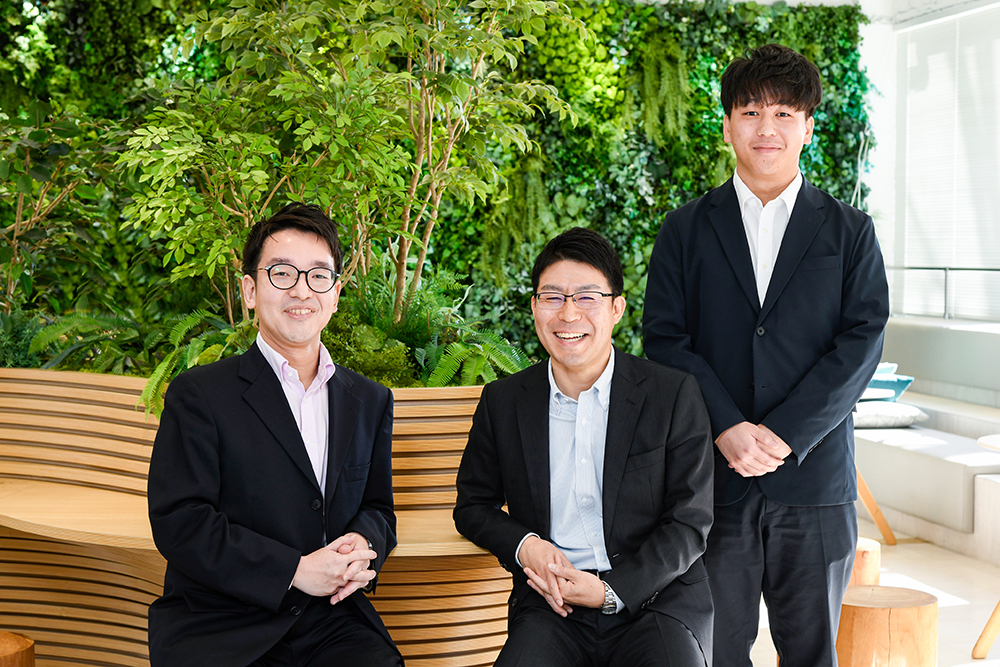
4th Space Systems Group
Space & Intelligence Systems Department
Aerospace Business Division, NEC
Toyoda: Although I've only been with NEC for a short time, I can already see what Kabatani was referring to. The company has established a strong framework for passing on technical expertise and knowledge. Not only are there plenty of opportunities to learn on site, but whenever I have questions, senior colleagues patiently guide me through them step by step. I think this culture of passing knowledge on to the next generation is another quality that makes NEC unique.
Supporting the challenge of space business
—Finally, what do you find most rewarding about working in NEC's space business?
Kabatani: Our role is to provide comprehensive support for rocket launches from the ground. Our work goes beyond simply building equipment or conducting inspections and simulations. Our mission involves thinking ahead about everything required to ensure a successful launch, and watching over the rocket from the moment of liftoff until it completes its role in space. Being entrusted with that entire process as part of the broader endeavor of space business gives us a tremendous sense of fulfillment and pride.
Inoue: There are countless satellites orbiting the Earth, but of course they didn't get there on their own. A successful mission requires many different efforts before a satellite can be placed into orbit. Much of that work happens behind the scenes, but we take pride in supporting those missions as the unsung team behind every launch. Having the opportunity to contribute to such an important mission is what I find most rewarding.
Toyoda: Rocket launches are national projects backed by significant investment. The opportunity to work on projects of that scale is something I have because I'm part of NEC. Knowing that I'm helping support Japan's space endeavors and contribute to society gives me a real sense of purpose.
—Looking ahead, what do you see as the team's priorities? What would you like to accomplish in the years to come?
Inoue: We expect the pace of rocket launches to increase in the future. Our immediate goal is to work with JAXA to develop new systems capable of handling that growing demand. We're aiming to build stable, highly reliable systems that minimize the risk of problems occurring. At the same time, even if an issue does arise, it's important that the system can handle it and ensure the mission proceeds successfully.
We also want to establish mechanisms and organizational structures that enable us to resolve issues quickly whenever they occur.
Toyoda: Personally, my top priority is to deepen my technical knowledge and skills and become a true professional in this field. I hope to become a specialist in both systems and equipment so that I can take on greater responsibility in supporting space development projects.
Kabatani: Our role is to provide comprehensive support for rocket launches from the perspective of launch site and launch pad facilities, whether that spans several years or several decades. Our work goes beyond simply building equipment or conducting inspections and simulations. We draw on all of our knowledge and expertise to help ensure the success of these national space endeavors, supporting over the rockets through their generational transitions until they complete our mission. Being able to carry out that responsibility as part of the broader endeavor of space business is what gives us such a strong sense of fulfillment and pride.
Inoue: Close collaboration with NEC's other space sectors is also essential. As we continue to deepen our own expertise, we also want to strengthen NEC's overall capabilities in the space business. That's the direction we hope to pursue moving forward.
August 5, 2026